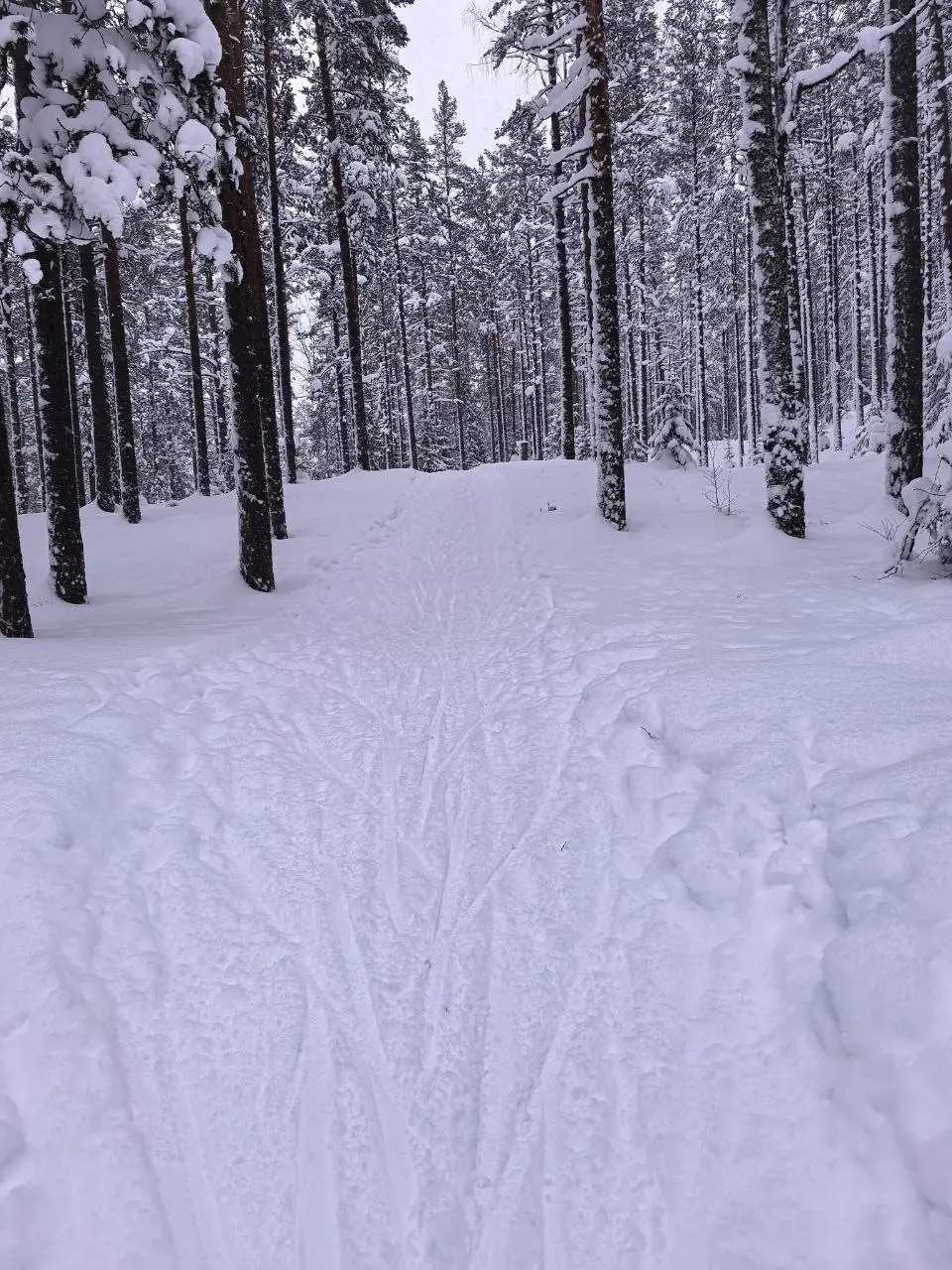
What to take on a one-day ski trip: gear, food, a thermos and caffeine, spare socks, an offline map — and what to do if you get wet. The list comes from trips around St Petersburg.
In summer, wet feet are just discomfort. In winter, they are cold that quickly turns into "time to call it a day". Add three more things: it gets dark early, water under the snow looks like snow, and sounds in the forest are shorter and more muffled. So the list for a ski day is built not around "what to eat" but around dryness, warmth and light.
The classic three-layer system is what works:
The key item people usually forget: a dry layer in your backpack for stops. The moment you stop moving, clothing soaked with sweat starts working against you.
Small things that only show up in freezing weather: spare gloves (a second, dry pair), a thin hat to go under the hood, a scarf or buff that covers your face in the wind.
Spare socks in a waterproof bag. This is the cheapest way to save an entire route. Wet feet in freezing weather mean a guaranteed early exit, and dry socks weigh fifty grams.
Two more habits from practice on forest ski tracks:
A thermos with something hot is a mandatory item. And it is not just about warmth and taste: caffeine gives a noticeable burst of endurance for about 40 minutes, after which comes a dip, but it is manageable. Halfway along the route, when you start feeling low, a cup of something hot completely changes your state — it is the most effective piece of cargo by benefit for weight of anything you will carry.
What else to put in your backpack:
Download the map in advance. Outside the city there may be no internet at all: mobile coverage is barely enough for a call and for loading a map, and not always even that. Social media, feeds and messengers with images simply will not open — so you need to have your route plan and exit points offline.
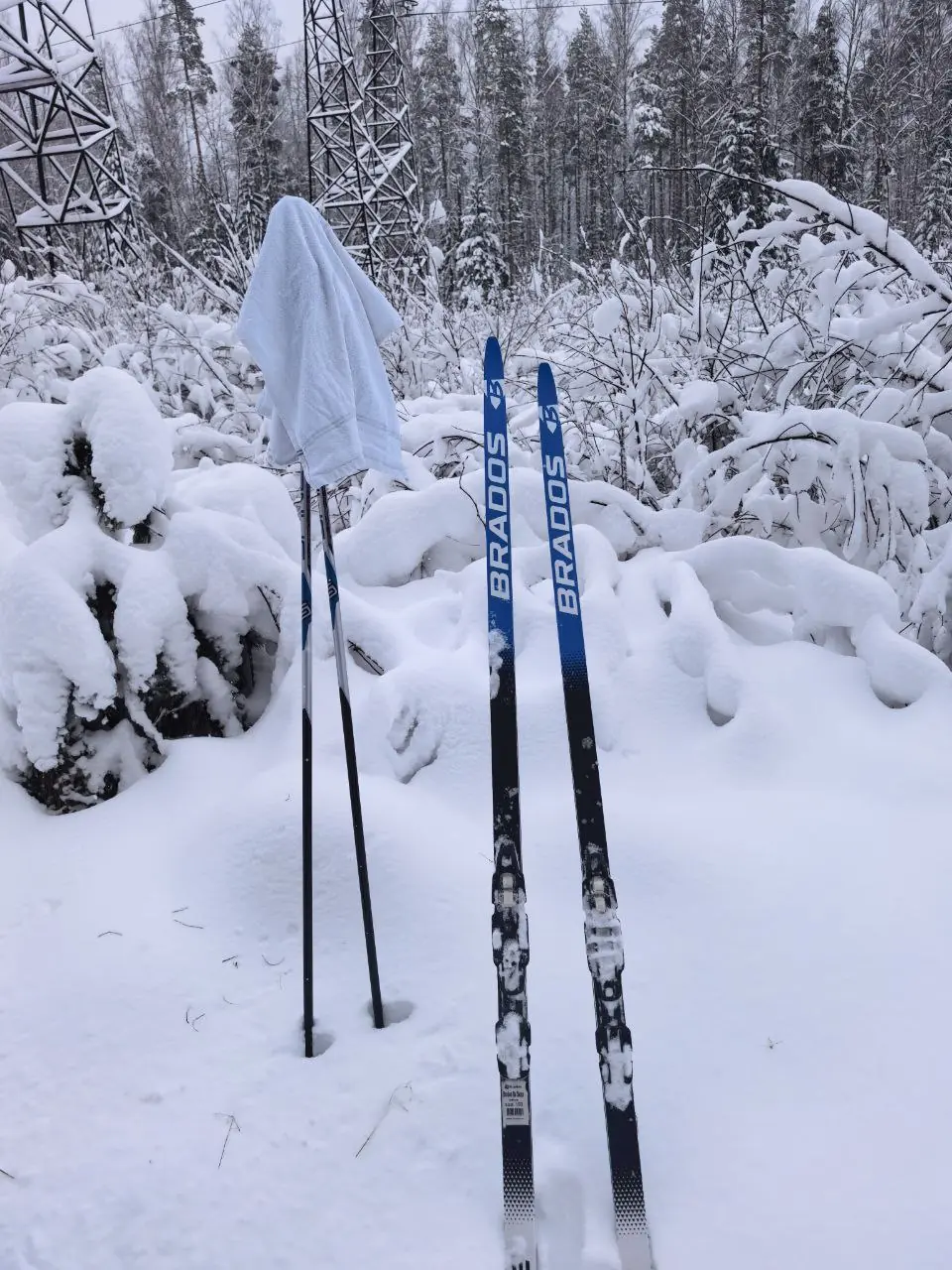
What else is worth doing:
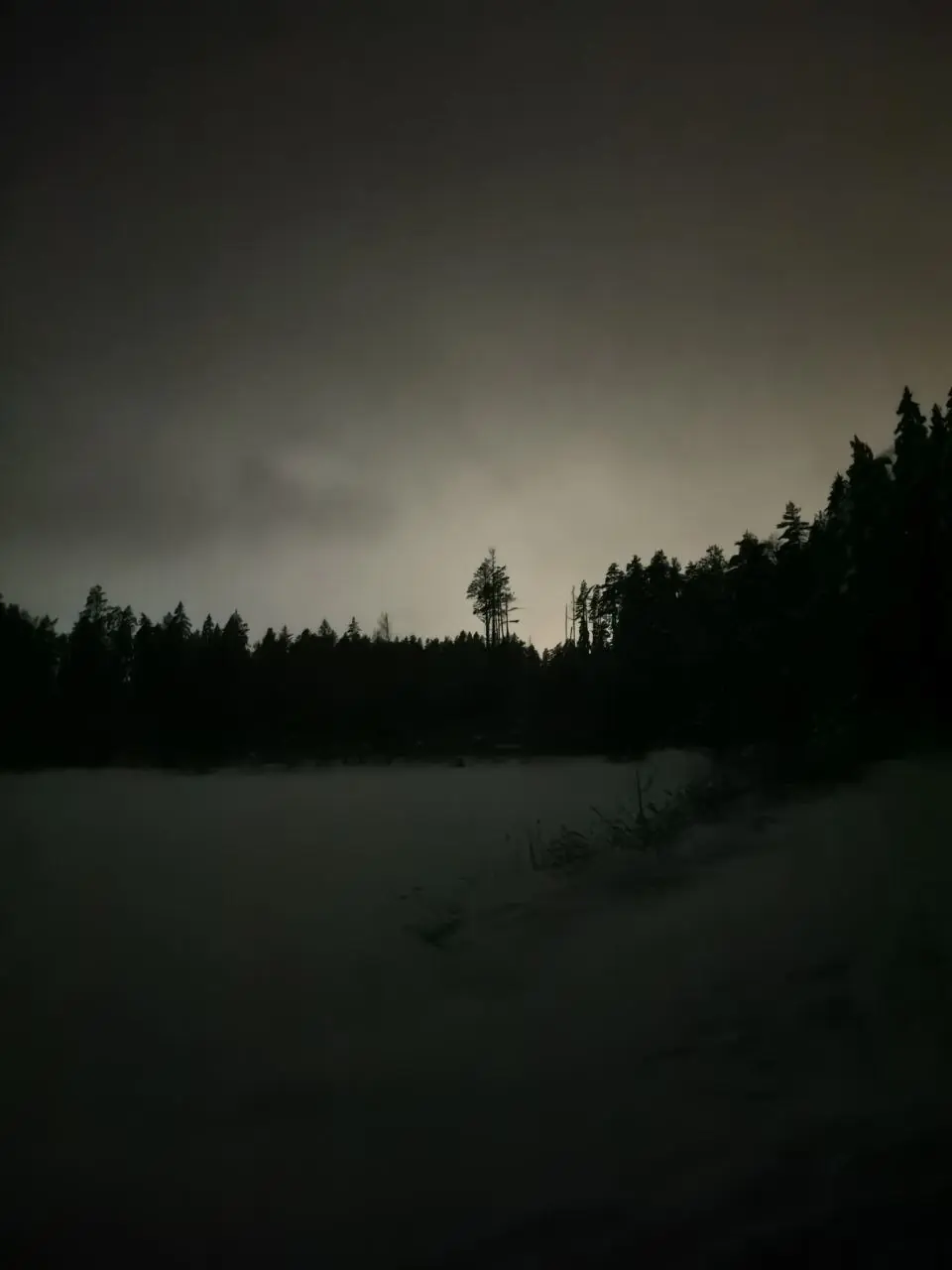
If there is any chance the day will end in darkness, a headlamp is mandatory. In winter it is not "if I make it before dark" but "I will reach the platform at dusk". A headlamp beats a handheld one: your hands stay free and the beam follows your gaze. A second small lamp in your pocket is insurance in case the main one dies.
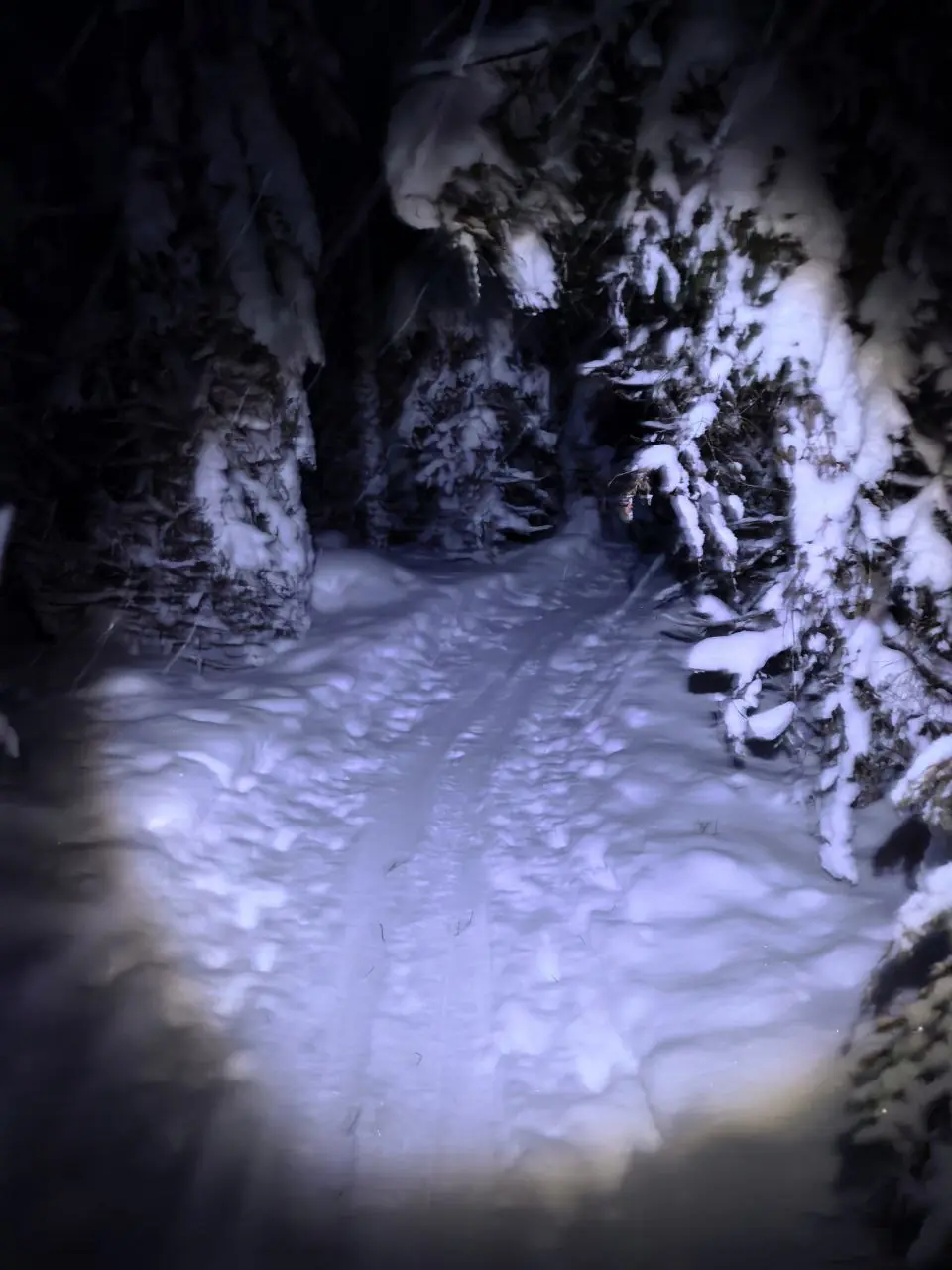
The order of actions worth remembering in advance.
feet cool down fast in the cold, and the decision "I will tough it out to the end" usually leads to the worst outcome.
and falling body temperature are the case where a ski outing should rightly be ended.
A thermos with something hot, spare socks, a headlamp and a map downloaded in advance. Those four things cover most of the problems a winter day throws at you.
Something hot restores your strength and your mood during a stop, and caffeine gives roughly 40 minutes of extra endurance. Water in an ordinary bottle freezes in the cold.
Change your socks for the dry pair from your backpack right away, drink something hot and, if the cold does not pass, end the route. Toughing it out and pushing on is the most common mistake.
Yes. A winter day is shorter than your plans, and trails usually have no lighting at all: in Orekhovo there are lamps only at the entrances.
This is an honest story from an outing, and it is worth remembering: a route can turn out worse than it looked on the map. I started dropping into deep puddles, soaked my feet badly, got cold — and the decision came by itself: make the way easier for myself.
Specifically, I walked out onto the railway tracks and covered the last 4 km to the station along them, looking around me the whole way. You should not do this, and here is why: snow deadens sound very effectively, and a train approaches almost silently — under falling snow you cannot hear a suburban train coming until it is right beside you.
The conclusion for the packing list is simple: spare socks and waterproof trousers earn their place in your backpack not "just in case", but as the way to avoid cutting the route short and avoid walking along the tracks because of wet feet.