Bike Repair Kit
A long trip differs from a ride around the neighbourhood in one thing: no car will come for you. So the repair kit is assembled not on the principle of "just in case", but on the principle of "what actually falls off".
What actually breaks on the road
The list is short and hasn't changed in years:
- the rear wheel unscrews and comes off;
- the inner tube bursts on a bump or a root;
- the chain slips off and tangles;
- the pedals tear off;
- the saddle stops holding;
- the handlebar unscrews and stops turning.
Nothing exotic. And almost all of it is fixed with one tool — if it's with you.
The adjustable wrench — the main tool
The adjustable wrench covers almost every repair possible in the field. With it you:
- replace the rear wheel by the cap;
- tighten the handlebar that has started to spin;
- tighten the saddle if it slips out of the seatpost;
- unscrew pedals and nuts of any size — the wrench opens from two to fifty millimetres.
The wrench is heavy and takes up space, but on its own it replaces a small set of spanners. With two such wrenches a bike can be taken apart and reassembled — which, incidentally, ends the argument about whether tools are needed on a trip.
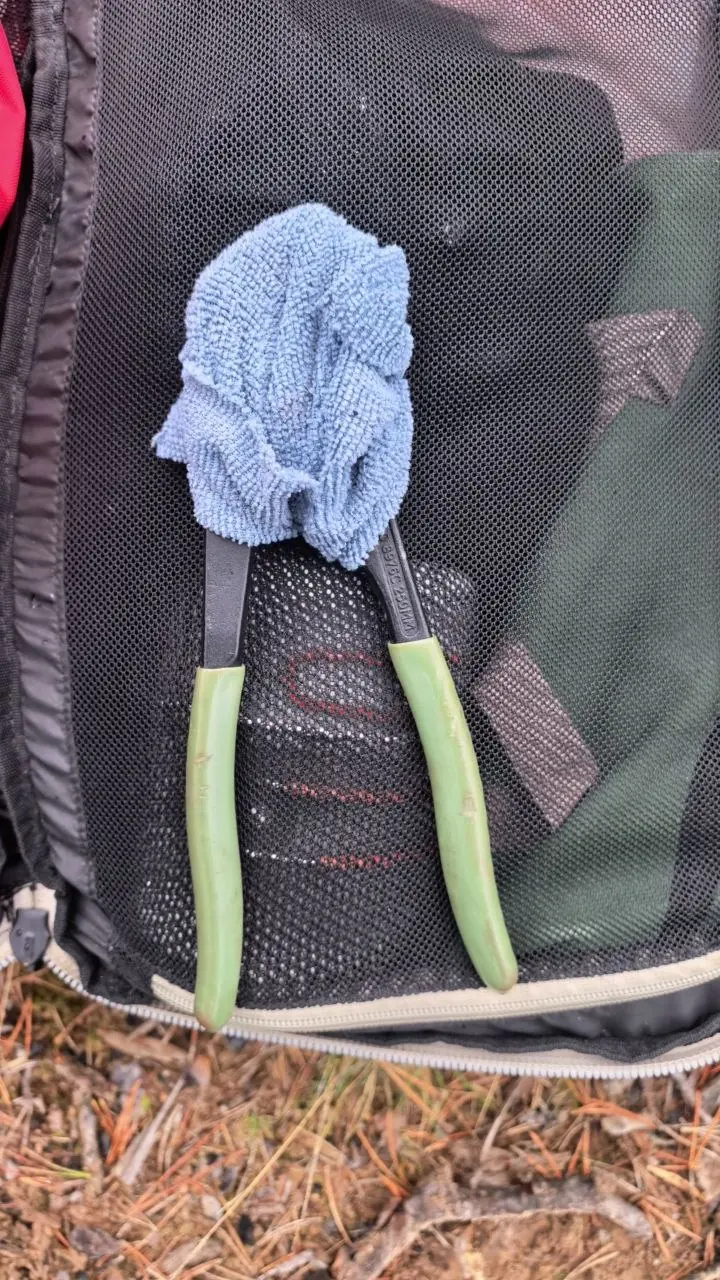
A separate case is the e-bike. There the spoke in the rear wheel holds more than the rim: it can tear out the armoured cable running to the motor, and the bike immediately loses power. You can't pull such a spoke out by hand, it's very strong — but with an adjustable wrench it is snapped off and you ride on.
Chain tool
If the chain breaks, you need a chain tool — a small device that pushes the pin out of a link. Without it a broken chain can't be joined: no paperclip, no wire, no rope will replace it.
There are two options. A separate chain tool is more reliable and cheaper. One built into a bike multitool is more compact: the same body holds hex keys, screwdrivers and often that same chain tool.
Multitool or a set of keys
A bike multitool covers small fasteners: tighten the rack, adjust the brake, straighten the mirror, remove a mudguard. It doesn't replace the adjustable wrench — it has no opening for nuts — but it takes a pocket instead of half a backpack.
A bike repair set is worth taking if you ride more than once. It usually contains hex keys of the needed sizes, screwdrivers, a chain tool and tyre levers. Tyre levers are needed to remove a tight tyre: it can be done by hand, but in the cold and with dirty hands it goes badly.
What else to put in
Spare chain links or a chain lock. If it broke right at the lock, no chain tool is needed — a new link is.
Zip ties. Cheap, light and they save you when something can't be repaired: lash back a fallen-off rack, secure a mudguard, tie up a bag.
Duct tape — wind a couple of metres around the handlebar or the pump. A universal thing: wraps, holds, protects from rubbing.
Chain lube in a small bottle. Not a repair, but in dry weather the chain starts singing after just thirty kilometres.
What the weight should be
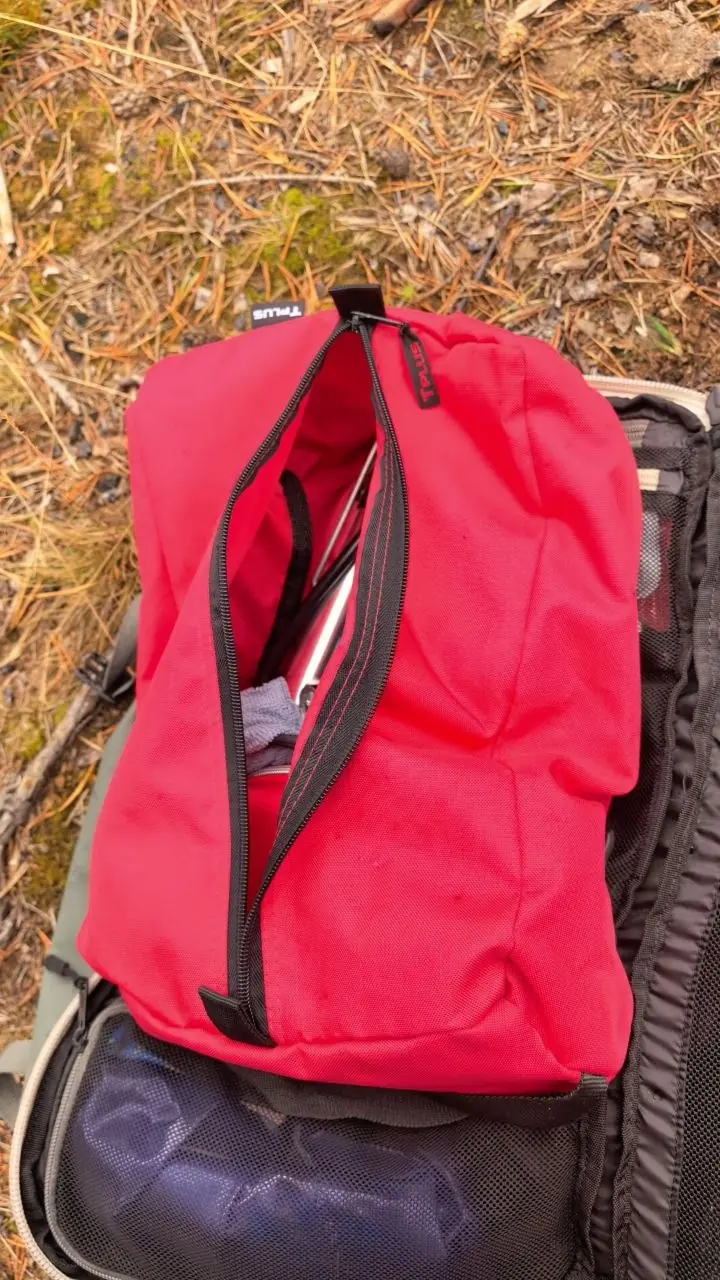
A full repair kit comes to about two kilograms: wrench, chain tool, multitool, tyre levers, spare links, zip ties and a few consumables. That's a weight you can ride with all day, and it pays for itself once — on the trip when something fell off far from people.
The order of buying
If you're starting from scratch, don't buy everything at once. First a pump and an inner tube — that's the most frequent breakdown. Then the adjustable wrench — it covers everything that has unscrewed. Then the chain tool. The rest accumulates by itself: by the third trip you'll know exactly what you were missing.
Frequent questions
An adjustable wrench, a chain tool or a multitool with one, tyre levers, a spare chain link, zip ties and duct tape. Plus a pump and a spare inner tube as a separate basic kit.
Not all multitools have a chain tool. A separate chain tool is more reliable: without it a broken chain can't be joined in the field.
A spoke can tear out the cable to the motor and break the chain. You can't pull it out by hand — it is snapped off with an adjustable wrench and the trip continues.
About two kilograms in full: wrench, chain tool, multitool, tyre levers and consumables.
Related
- What to take on a bike trip — Big article: 15 things tested by breakdowns
- Carrying a bike on a commuter train — When it's free, when it's paid and how to carry it comfortably
- Pump, inner tube and patches — The kit that covers the most frequent breakdown
- Bike first-aid kit — What to put in a travel first-aid kit and how to treat grazes
- Bike lock — Chain or cable: what protects and why convenience matters more than weight
- Bike light — How to choose a light to see the road and be seen
- Bike gloves — Why the palms take the impact and how to choose the size
- What to take on a 1-day hike — A short list without extra weight
Frequently asked questions
What should be in a bike repair kit?
An adjustable wrench, a chain tool or a multitool with one, tyre levers, a spare chain link, zip ties and duct tape. Plus a pump and a spare inner tube as a separate basic kit.
Why is a chain tool needed if there's a multitool?
Not all multitools have a chain tool. A separate chain tool is more reliable: without it a broken chain can't be joined in the field.
What to do if a spoke breaks on an e-bike?
A spoke can tear out the cable to the motor and break the chain. You can't pull it out by hand — it is snapped off with an adjustable wrench and the trip continues.
How much does a repair kit weigh?
About two kilograms in full: wrench, chain tool, multitool, tyre levers and consumables.