Bike Light and Bike Headlight
Light on a bicycle solves two different tasks, and this distinction is the main thing when choosing. First: you must be seen. Second: you must see.
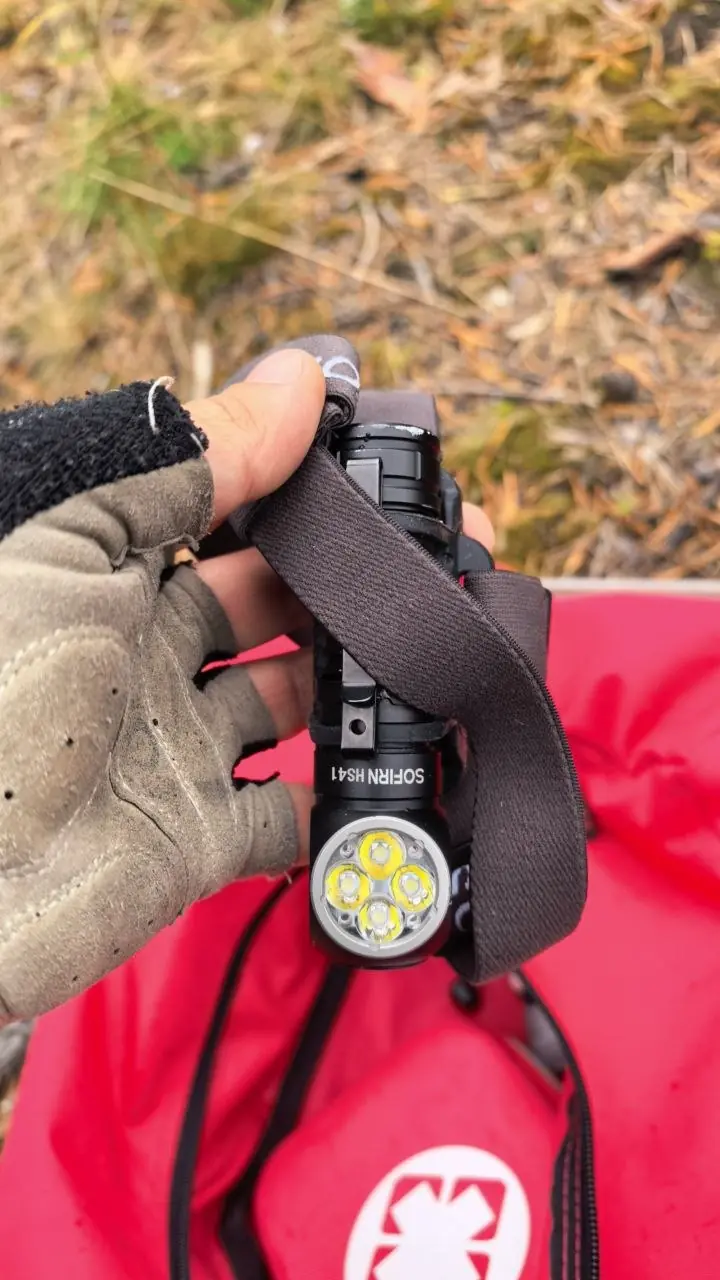
A cheap flashing flashlight covers the first task and not the second. A good light covers both, and the price difference between them is small.
Visibility and illumination are different things
Visibility is when a driver sees you from fifty meters. A red flashing light at the back and any white light at the front work. Brightness here needs to be modest; the flashing mode matters more: steady light blends with car headlights, flashing catches the eye.
Illumination is when you see what's under your wheel. Here you need real light: roots, branches, potholes, and puddles at night all look the same—a flat dark spot.
Bike light or headlamp
A bike light mounts on the handlebar and shines where the handlebar points. On a straight road this is perfect. In the forest it's not so good: on a turn the handlebar goes sideways while you look at the trail the beam hasn't reached yet.
A headlamp shines where your head turns. Look at a fork—you see the fork. Turn at a sound—you immediately see what's there. For forest roads and trails this is the winning setup, and on a flat route there's no difference.
A practical option is both: a headlamp on yourself, a weak marker light on the handlebar, and a red flashing light at the back.
How many lumens you need
Lumen guide:
- up to 200 — to be visible and light the trail next to the bike;
- 300–600 — comfortable riding on gravel and forest roads;
- 1000 and above — fast riding at night where braking takes seconds.
Chasing the maximum is pointless: at high brightness the light heats up and drains in an hour or an hour and a half. What matters more:
- a removable battery or power from regular batteries: a dead light in the forest can't be replaced, and a spare cell weighs next to nothing;
- water protection — IPX4 and above: rain on a trip is normal;
- a mount that doesn't wobble on bumps;
- a moderate-brightness mode that lasts several hours, not just a twenty-minute turbo.
Where a bike light is especially needed
Evening road along a highway. Here the light isn't about the forest but about being seen. Visibility is the only protection.
Returning from the forest after sunset. The way home is often longer than planned, and the last kilometers are ridden in the dark.
Camp and evening chores. The same headlamp lights the tent, the pot, and the backpack, freeing your hands. That's half its usefulness: you don't need a separate camp flashlight.
In winter. On skis, with a bike, or on foot—headlamp light works the same.
A common mistake
Buying the cheapest light 'just to have one' and discovering its weakness halfway down a forest road when it's already too late to turn back. Light is a category of gear where the difference between bad and good is immediately obvious and needs no explanation.
How much it costs
A decent headlamp starts at around 1,500–2,500 rubles. Cheap battery-powered lights are fine for camp but not for riding: they're enough to 'be seen' and not enough to 'see the road'.
Frequently asked questions
For forest roads, a headlamp: it shines where your head turns, not where the handlebar points. Many carry both: a headlamp on themselves and a marker light on the handlebar.
For visibility, 100–200 is enough; for comfortable riding on gravel you need 300–600; for fast night riding, from 1000.
Power (removable battery or batteries), water protection (IPX4 and above), a mount that doesn't wobble, and a moderate mode that lasts several hours.
In the forest during the day it's not needed, but if the trip might stretch until dark, the light should be in your backpack: returning along a forest road without light is not allowed.
Related
- What to take on a bike trip — Big article: 15 things tested by breakdowns
- Transporting a bike on a commuter train — When it's free, when it's paid, and how to carry it conveniently
- Pump, tube, and patches — A kit that covers the most common breakdown
- Bike repair kit — Adjustable wrench, chain tool, and what actually breaks
- Bike first aid kit — What to put in a travel first aid kit and how to treat scrapes
- Bike lock — Chain or cable: what protects and why convenience matters more than weight
- Bike gloves — Why the palms take the impact and how to choose the size
- What to take on a 1-day hike — A short list without extra weight
Frequently asked questions
What's better for a bicycle—a bike light or a headlamp?
For forest roads, a headlamp: it shines where your head turns, not where the handlebar points. Many carry both: a headlamp on themselves and a marker light on the handlebar.
How many lumens does a bike light need?
For visibility, 100–200 is enough; for comfortable riding on gravel you need 300–600; for fast night riding, from 1000.
What to look for when choosing a bike light?
Power (removable battery or batteries), water protection (IPX4 and above), a mount that doesn't wobble, and a moderate mode that lasts several hours.
Do you need a light during the day?
In the forest during the day it's not needed, but if the trip might stretch until dark, the light should be in your backpack: returning along a forest road without light is not allowed.