What to Take on a Weekend Bike Trip
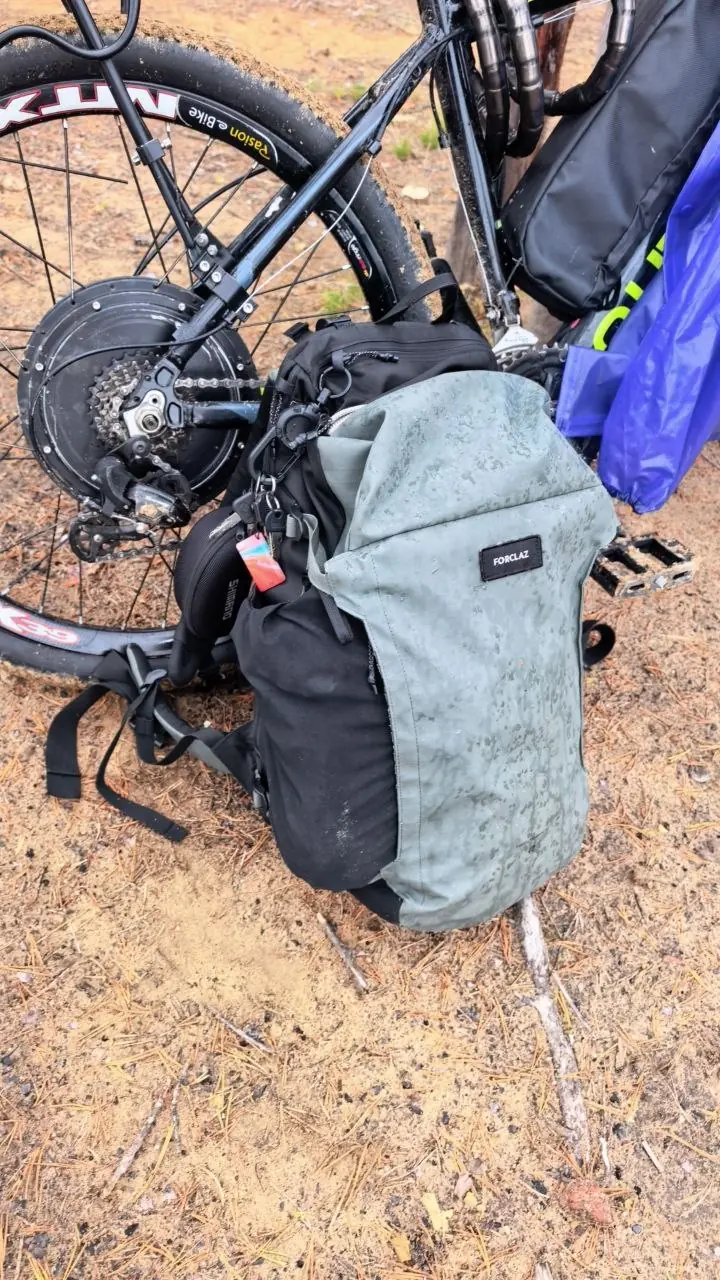
You're going for a day, ten kilometers or a hundred — doesn't matter. A trip breaks not when you're tired, but when something falls off. When you're tired, you can always decide: I'll make it to the lake and turn back. But when a wheel explodes on a root, the chain flies into the bushes, and the saddle stops holding — you're no longer the one deciding.
This kit was assembled over years, and there's not a single thing in it "just in case." Each was bought after a specific breakdown or a specific evening that was ruined for no reason. The kit has one job: to make the trip end when you want it to, not when something breaks.
Why the kit accumulates on its own
If you ride regularly, problems become regular too. My rear wheel came loose. A tire exploded on flat ground. The chain fell off. Pedals tore off. The saddle stopped holding, the handlebar unscrewed and stopped turning. Once a spoke ripped out the armored cable that runs to the rear motor — and the e-bike immediately lost everything that made it an e-bike.
Nothing exotic. This happens to everyone who rides off asphalt. The only question is what you have with you at that moment.
Repair: what ends the trip without it
I'll start with the main thing, because without it the rest makes no sense.
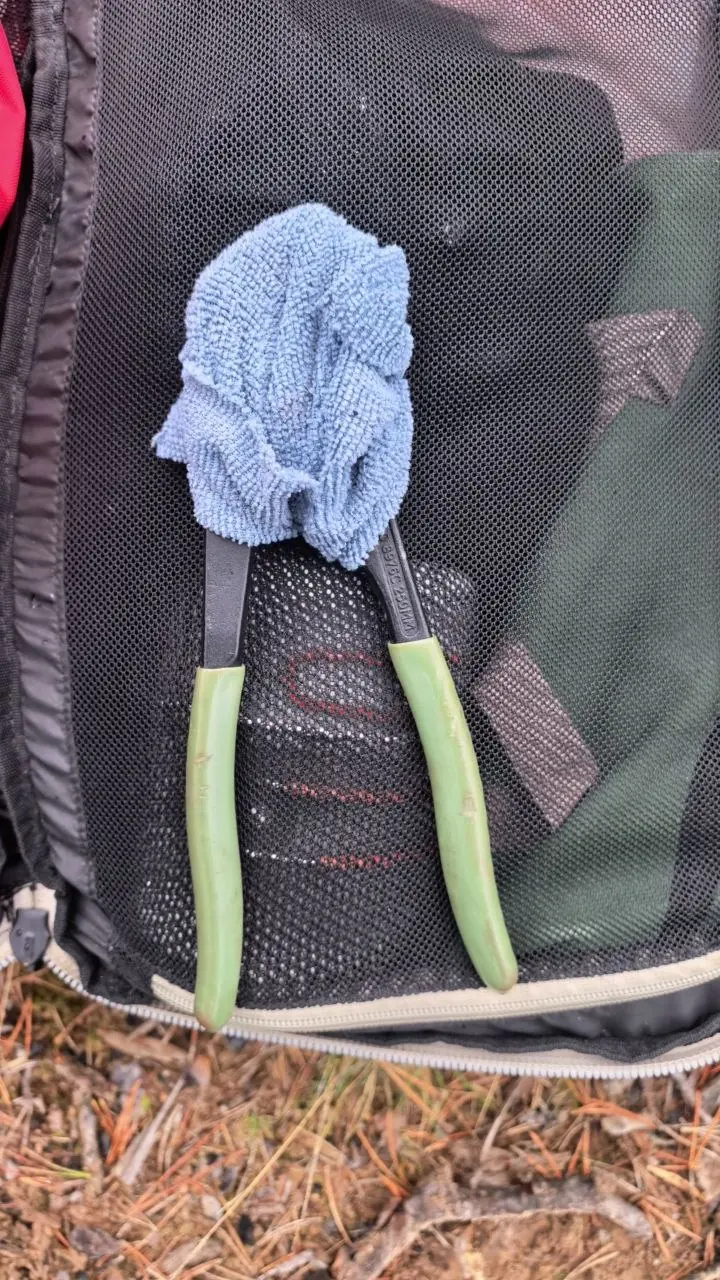
Adjustable wrench. It seems like a small thing, but in the field it solves almost everything. Without it, you can't replace the rear wheel on the cover, can't tighten the handlebar, can't tighten the saddle if it starts falling out. It fits diameters from two to fifty, meaning any nut on the bike can be unscrewed. It's so strong you can unscrew a whole screw and press in anything. It weighs a lot, costs around 300 rubles, and I realized I should always carry it. With two such wrenches, you can disassemble and reassemble a bike.
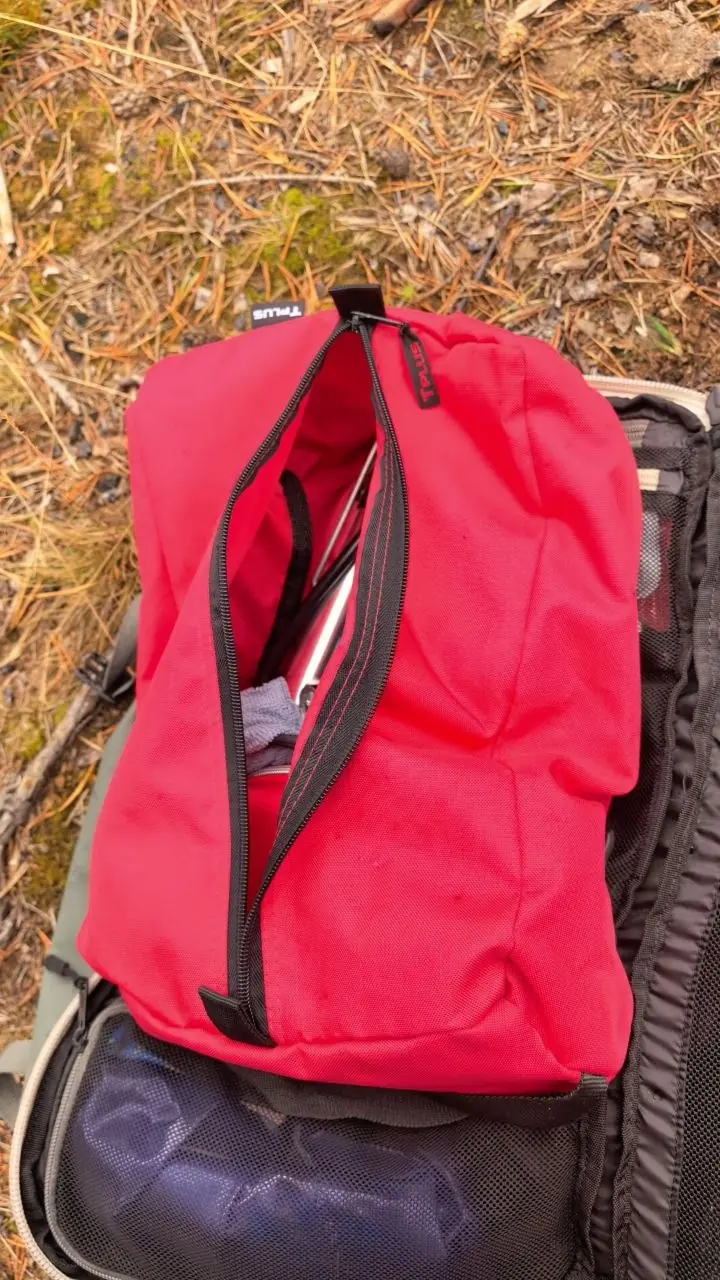
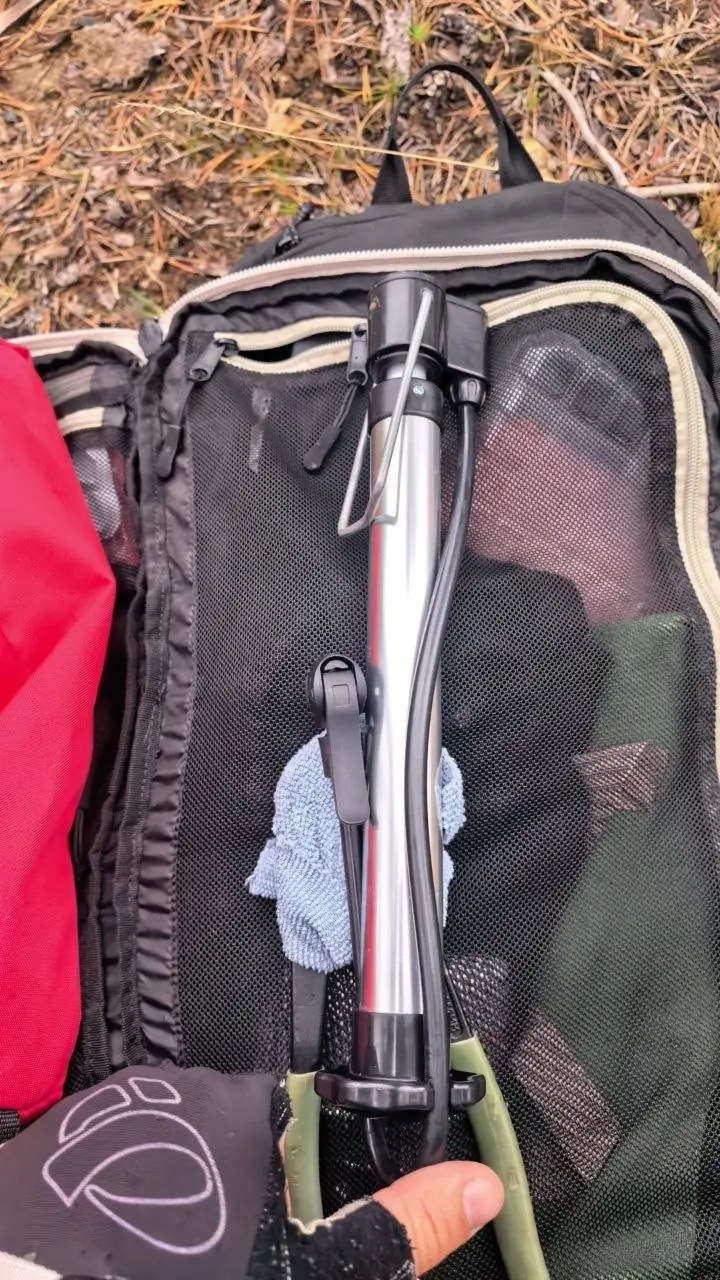
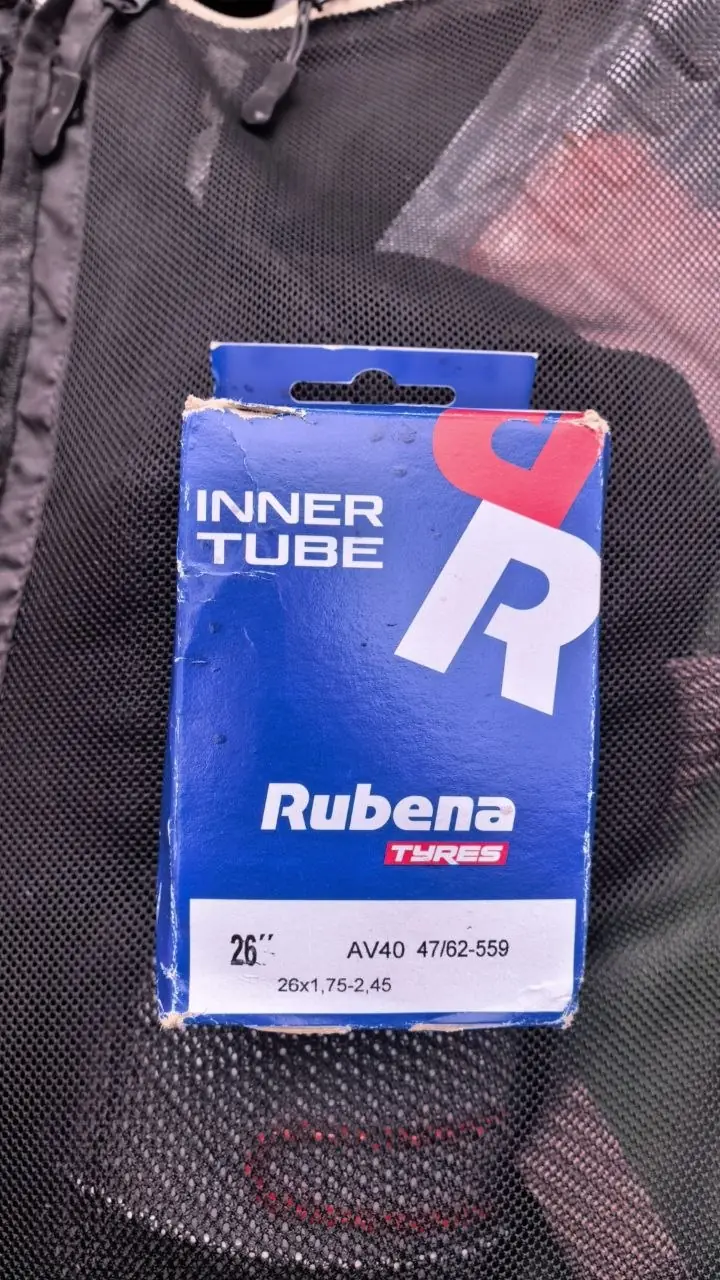
Tire, tube and pump — the replacement kit. I buy above-average priced tires because I ride in the forest. In the forest there's not much to puncture a tire if it's a good anti-puncture one. But that doesn't save you from a blowout. A blowout when hitting a bump, a blowout on a root that folded perfectly wrong — and you lose the bike. So the replacement kit is always with me: wrench, tire, pump. Tire removal is done by hand, but with a wrench it's faster.
E-bike: what gets added to the kit
If you have a motor, the kit is the same — the weight of problems changes. A spoke on an e-bike doesn't weigh like a spoke. Mine ripped out the armored cable that runs to the rear motor, and the bike immediately stopped being an e-bike: you ride, but not the same. Then, while you're riding on that, the same spoke rips out the chain — and the machine turns into useless cargo you have to drag somewhere.
You can't pull such a spoke out by hand, it's incredibly strong. But with an adjustable wrench you can just break it off — and ride on. That's exactly what this whole list is about.
Plus, an e-bike always has something that requires more water than you expected: you pedal less and speed is higher. But on sand and elevation changes it goes noticeably easier than a regular one — where on a regular bike you exhaust yourself, on a motor you ride calmly.
Light
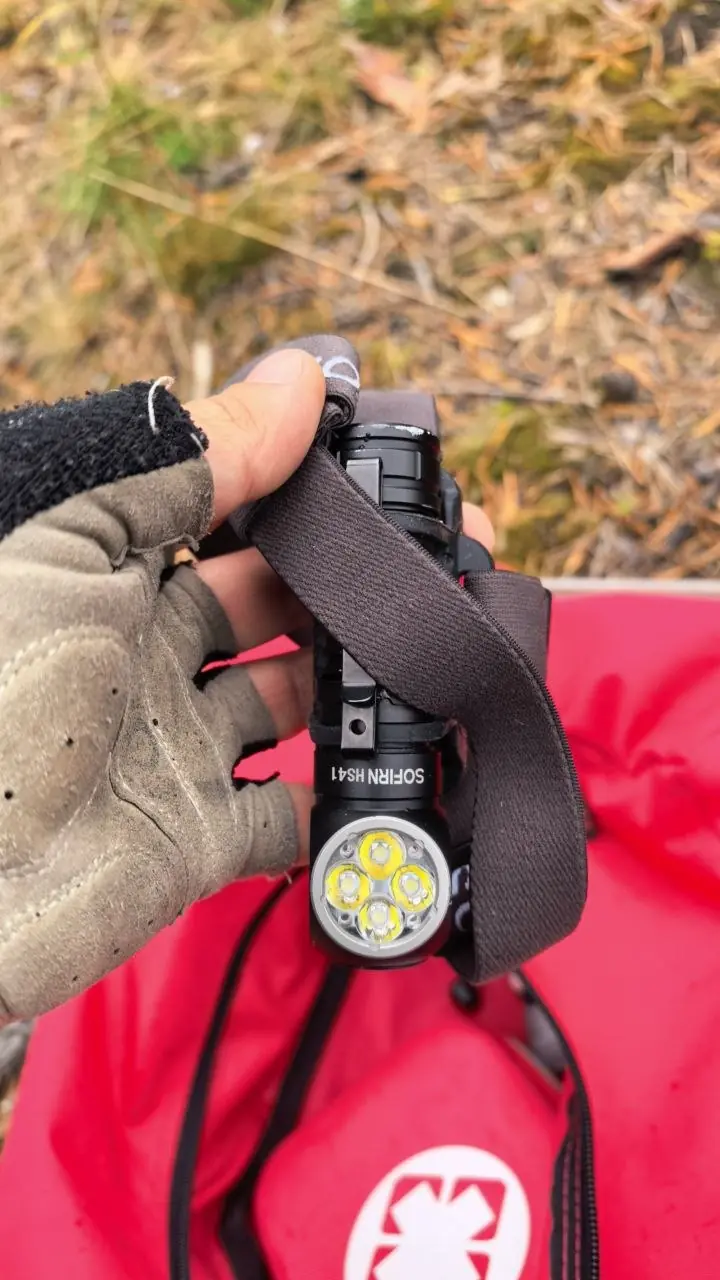
Headlamp. Needed in two cases. First — you're riding in the evening, and you need to be visible. A lamp on your head does this perfectly. Second — with the same lamp you shine where you turn your head: you look at a fork — you see the fork, not a spot in front of the wheel. It cost me 2,000 rubles, and this is a case where you shouldn't skimp on brightness: it's convenient both in the forest and in winter on skis.
First aid kit
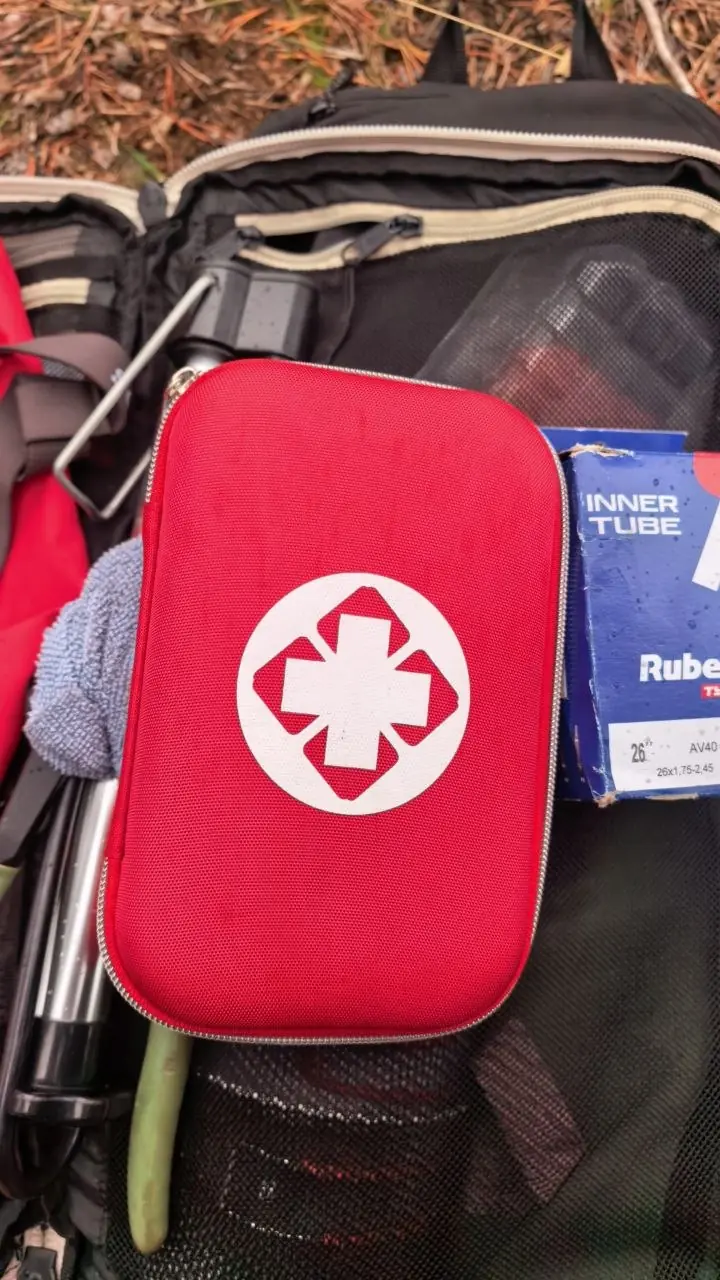
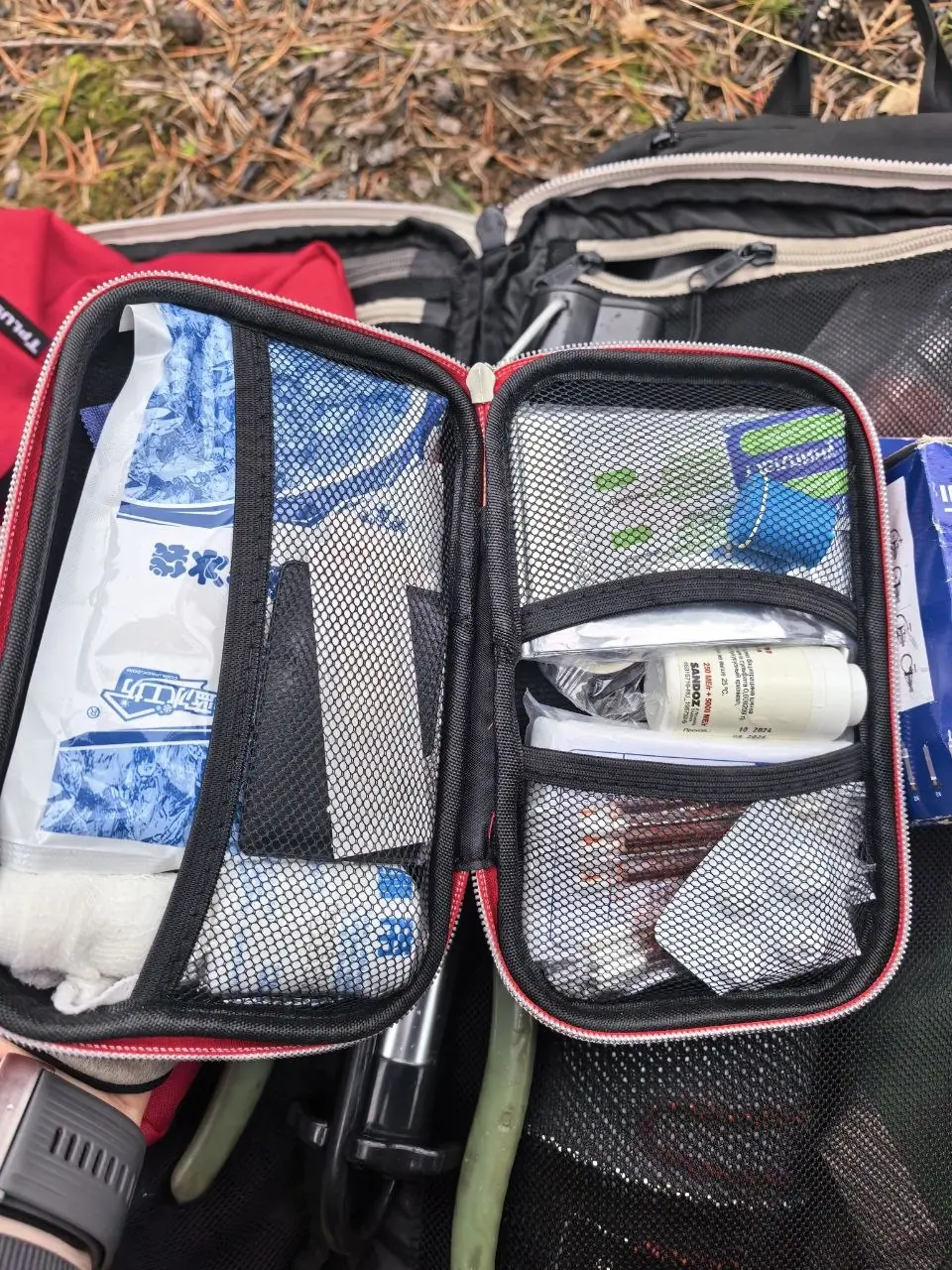
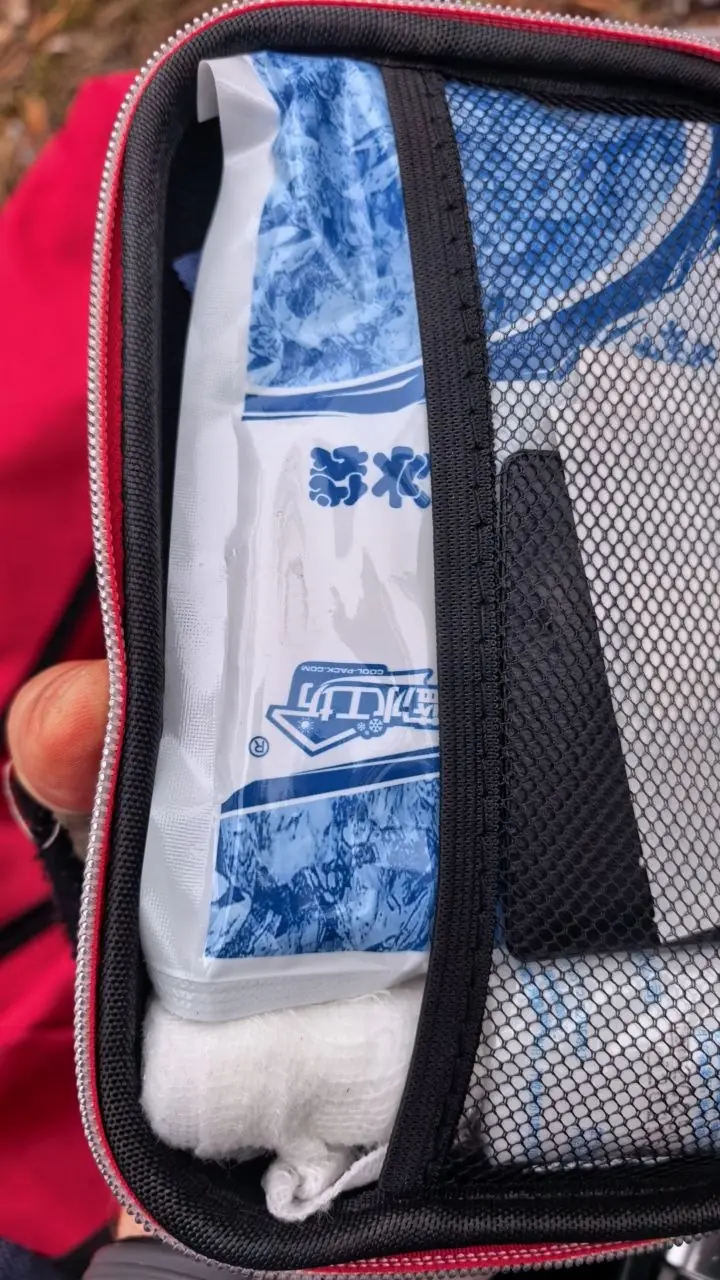
Bike first aid kit, aka road first aid kit. Falling at 15 km/h isn't about your head, it's about scraped skin. Asphalt wounds a couple of millimeters deep over several square centimeters hurt so much you can't ride: they bleed and sting on every turn of the handlebar. A simple first aid kit handles this, but it must be at hand.
What's in it: adhesive bandages (used up fastest), bandages, Baneocin, painkiller — so that if you've gone far and your head starts hurting, you can return normally, not on willpower. Plus iodine sticks: you break one — iodine appears, you can treat a wound on the spot.
Gloves
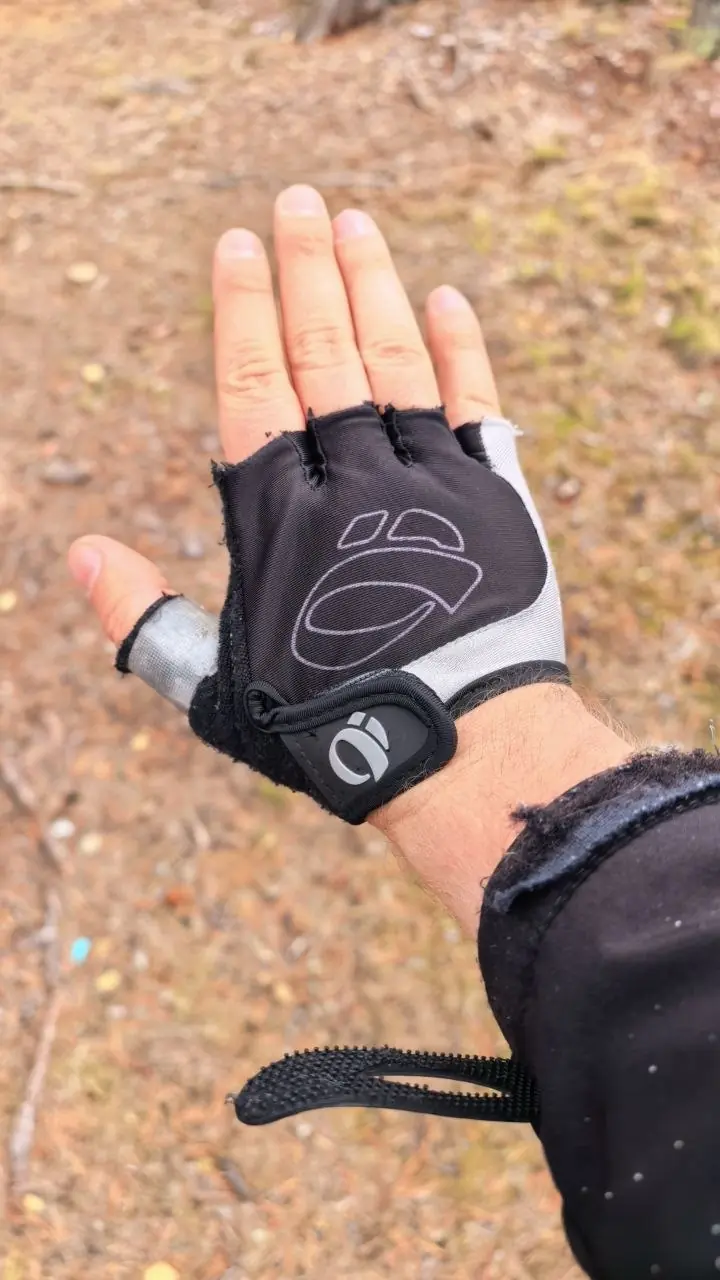
Bike gloves. We all think nothing critical will happen to us, and statistically that's probably true. But small falls happen to everyone — probability is simply against us. And in any fall, one part of the body takes the hit: the hands. A person instinctively puts them forward, it's built into us — to sacrifice hands but save the organs. On a bike you don't want to sacrifice your hands, so the energy of asphalt and dirt is taken by gloves.
Mine cost 400 rubles and are pretty worn out. They saved me two or three times. A hand bruise is an injury that will poison a month, so 400 rubles here cost less than a doctor.
Insects
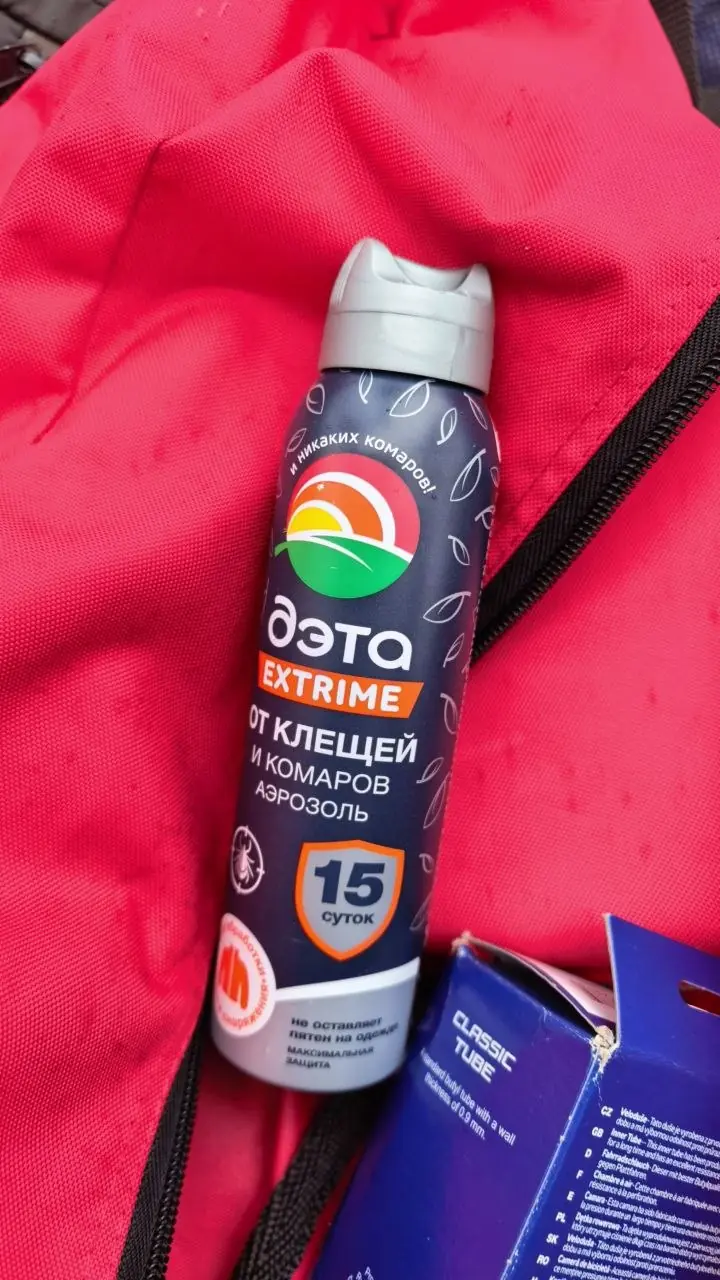
Mosquito and tick repellent. In the forest there are ticks, mosquitoes guaranteed, and also moose flies, which add little pleasure to anyone. A regular repellent saves you from all this. There's no point treating in advance — you'll realize you need it at the moment you need it. But it should already be in your backpack.
Rain
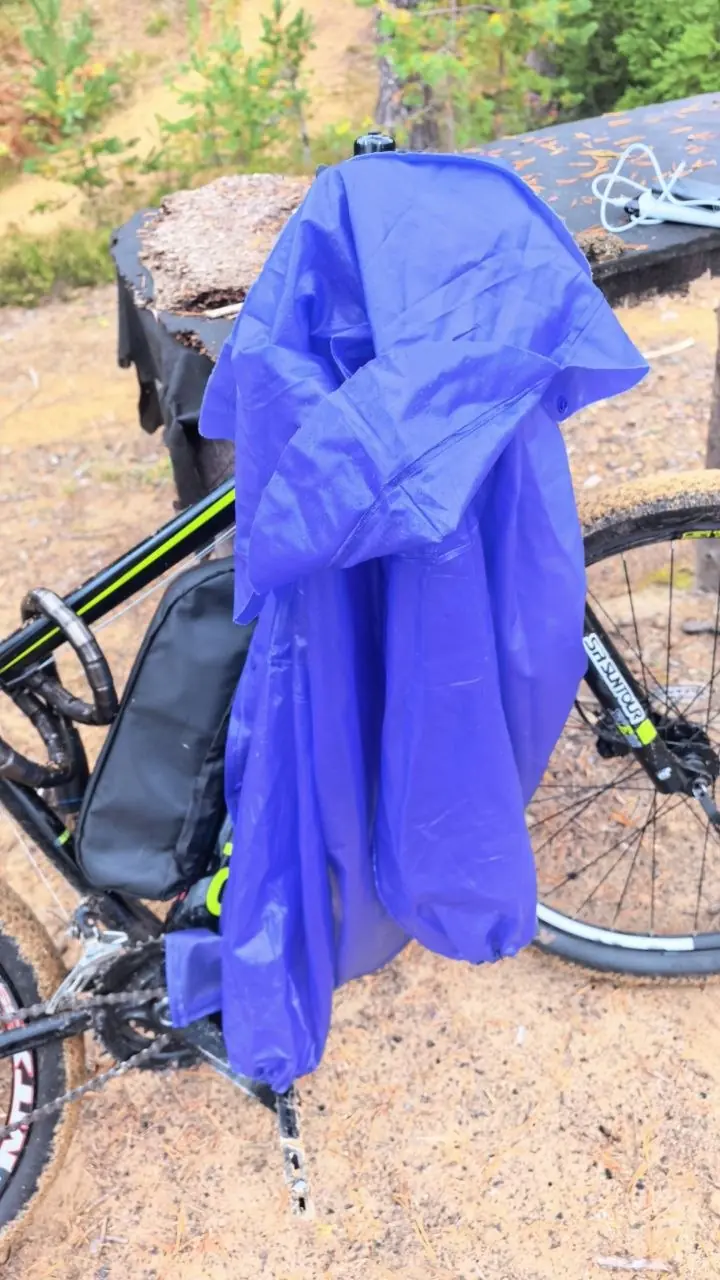
Raincoat. In September and October it rains regularly. Often it's short: twenty minutes at three in the afternoon. That's exactly when a raincoat works — wait it out and stay dry. Then you ride out and ride for the next three hours. Without a raincoat a person gets soaked, riding is unpleasant, and the day is over.
There's a rule here. The raincoat should be dense and made of polymer, not that same bag sold under this name. I don't believe in membranes: water is stopped by dumb physics, everything else is marketing. And the test is simple: put your backpack on over the raincoat. If it didn't tear — it's the one.
Mine costs 2,000 rubles.
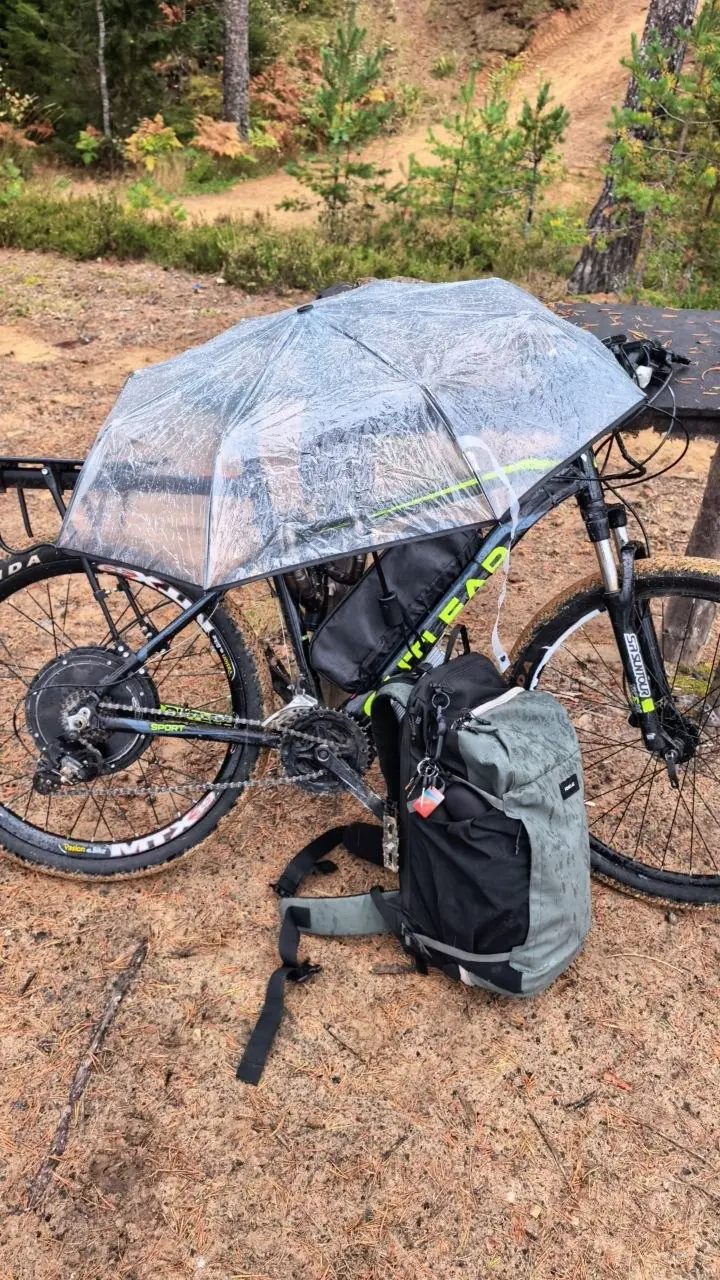
Umbrella. From the category "better not to take, but if you took it — it'll come in handy." If heavy rain starts and you need to protect things from water, an umbrella over the frame solves it: dry handlebar, dry saddle, dry things. You yourself calmly walk in a raincoat. And on an e-bike — one less waterproofing test.
Clothing and footwear
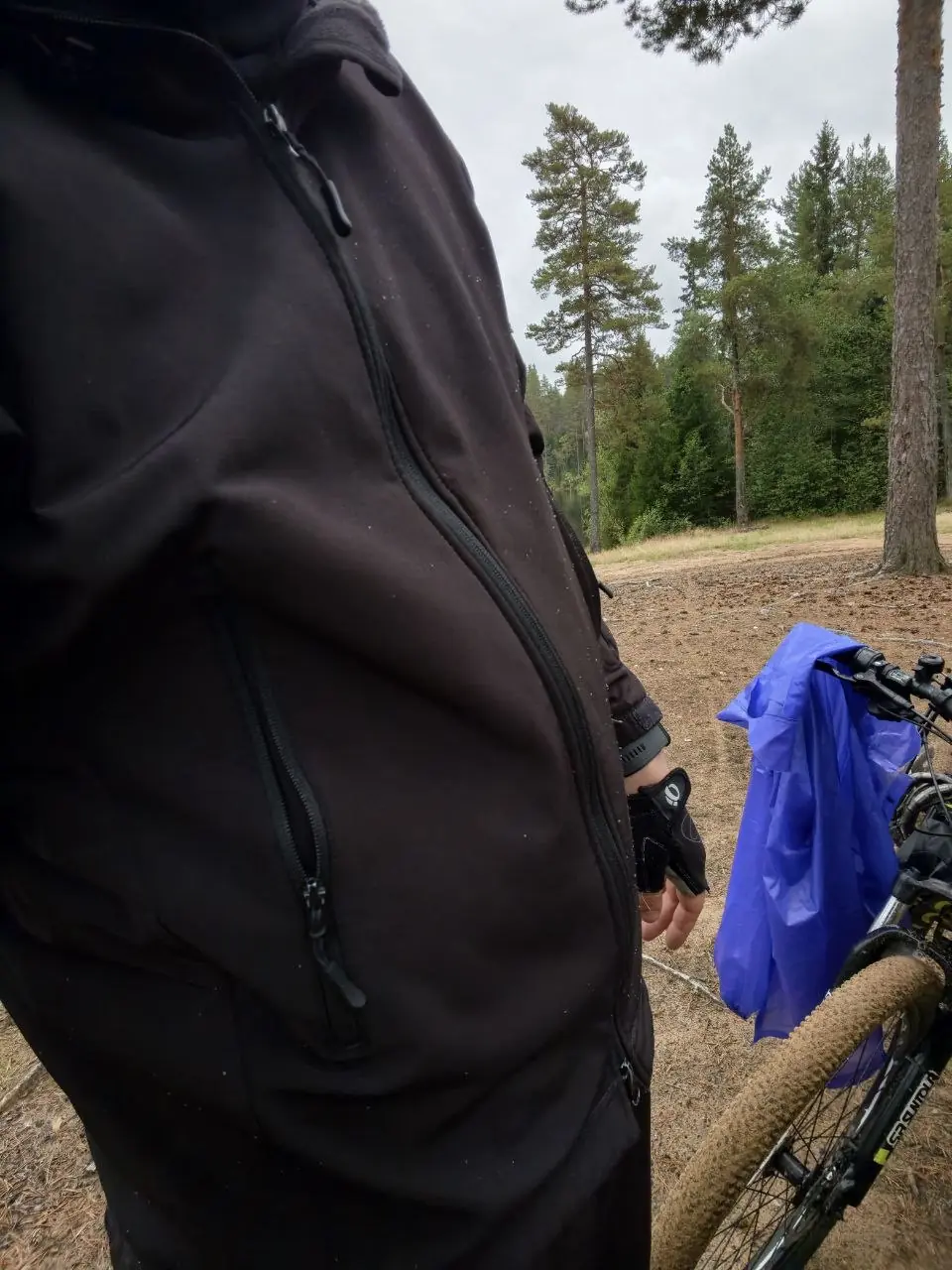
Soft Shell. You can joke about this fabric that it's not suitable for any condition. In heat you're hot in it, in cold you're cold. But it's universal: protects from rain, from dirt (dirt rolls right off) and from wind — it's sufficiently windproof. When you pedal, you can warm up in it and not get wet. The suit costs about 4,000 rubles, and you can wear it from May to October.
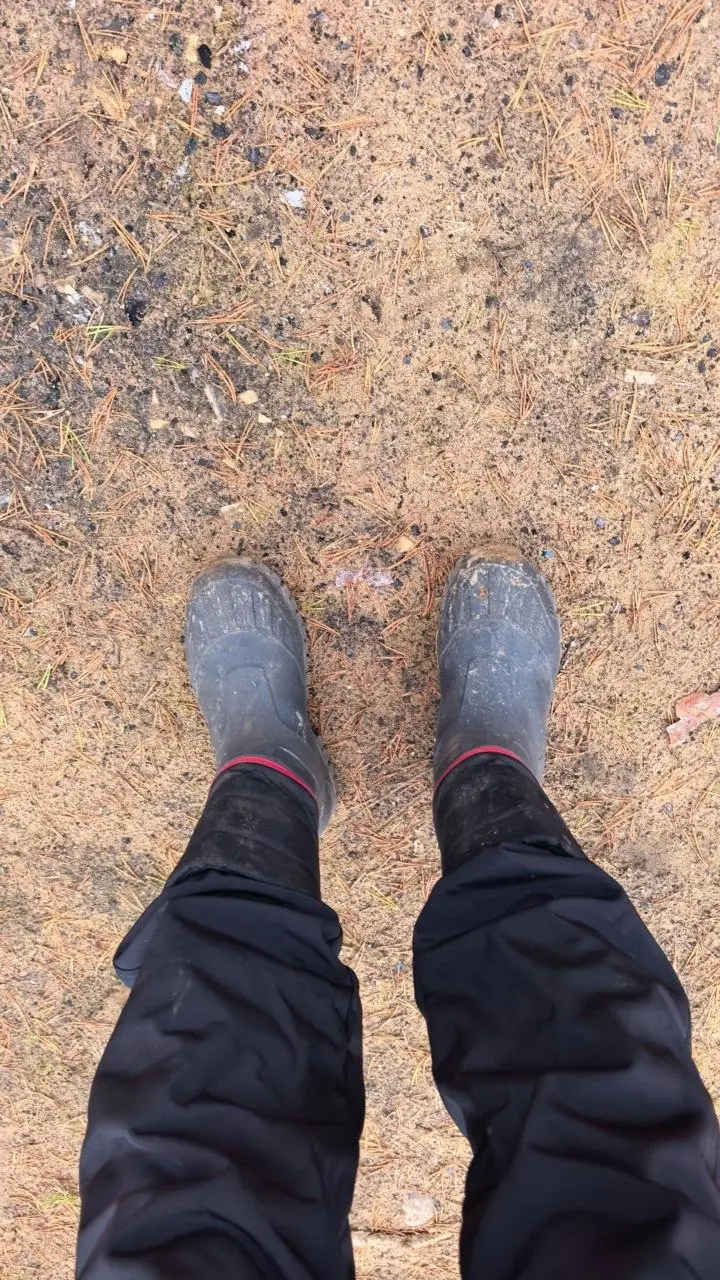
Polymer boots. They have one downside: they look unattractive. No more downsides. In them you can step into water, walk through a swamp, go through rough terrain with a bike — that is, do a route longer than the trail allows. And a separate point: the farther the trip, the higher the chance of meeting a viper. A boot it won't bite through, so you won't have to think about what to do about it.
Small things that weigh surprisingly much in usefulness
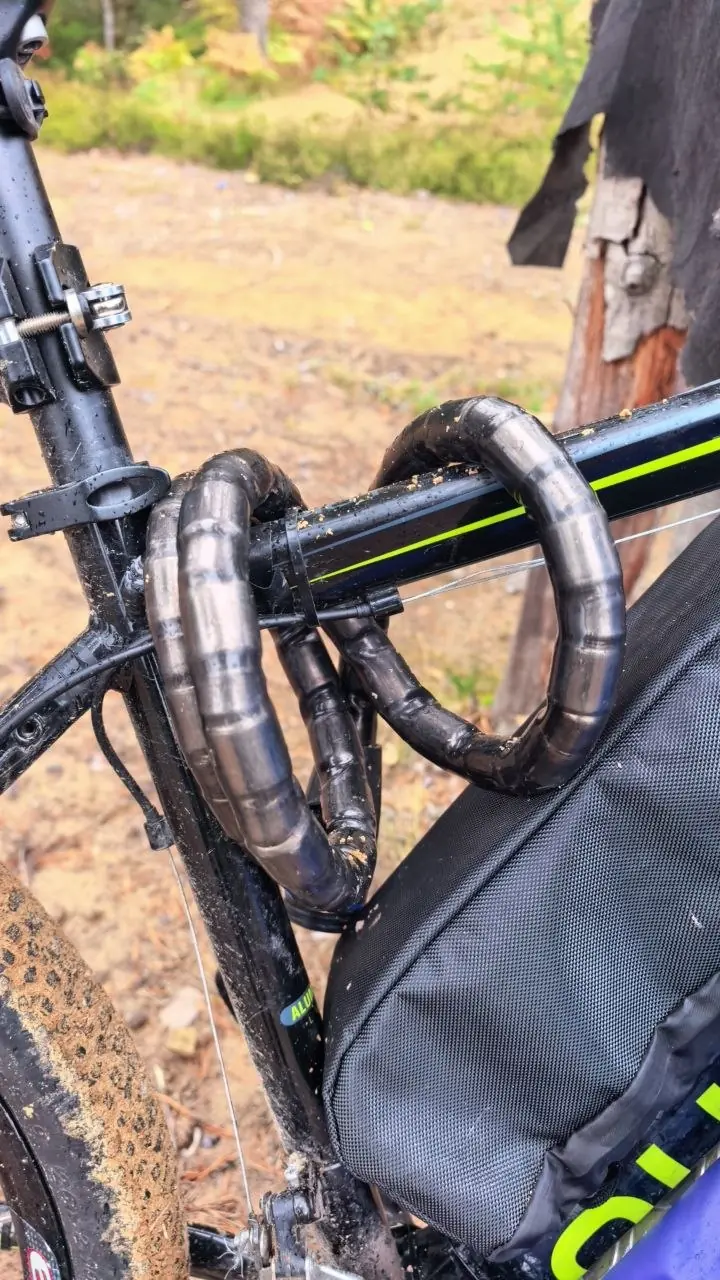
Thick chain. I always carry it. The point isn't protection from pros, but to leave the bike anywhere and not think about it. It frees your hands: in the forest there's always something to lock it to.
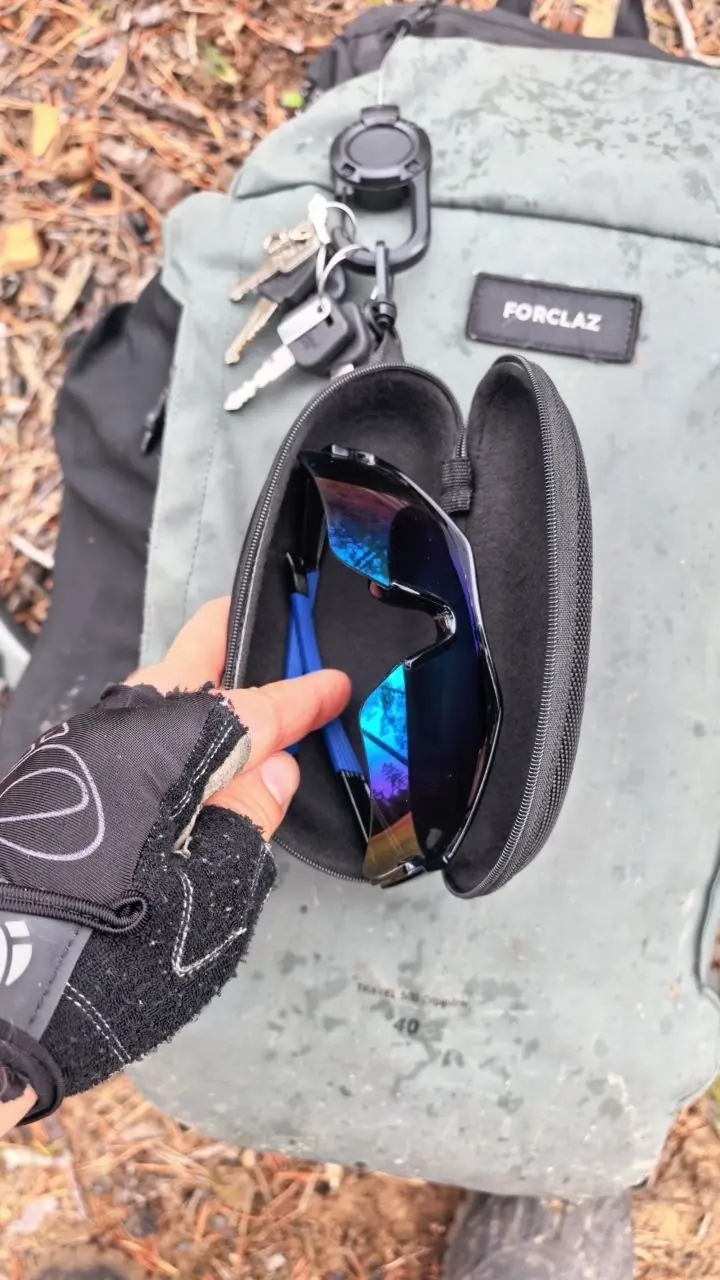
Glasses. Needed in two cases: when you ride far and the sun is shining, and when you ride near cars — stones and dust fly from wheels. There's also a third, which you remember already in the forest: branches. On a forest road they whip exactly at eye level, and eyes need to be protected here. So I have polarized glasses bought for 400 rubles. Plastic that doesn't break — nothing more is required from them.
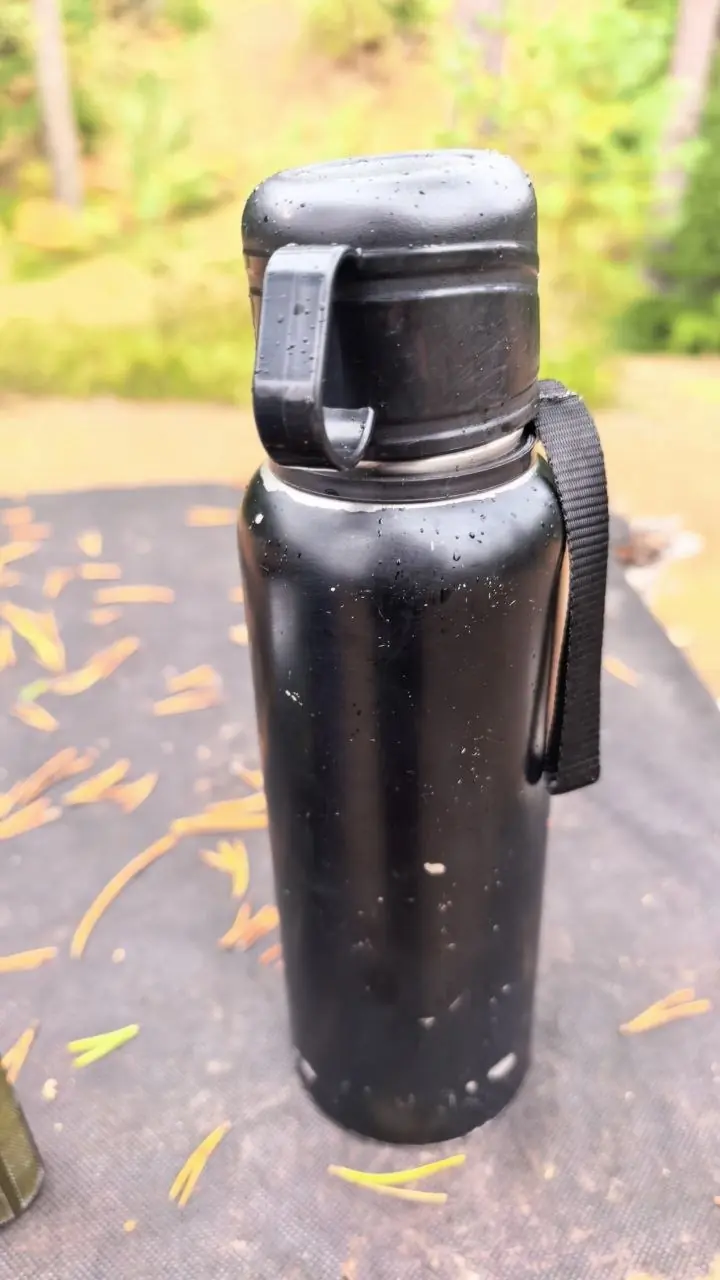
Thermos with coffee and water. I love coffee and take 0.7 liters with me. But here's important arithmetic many don't know: coffee removes water from the body. For 300 milliliters of coffee drunk, you need 300 milliliters of water drunk. So I always also carry a liter of water — that's enough for a day if it's not hot.
Backpack. Mine is 40 liters. It's enough for me, everything listed above fits. I bought my first one for 80 dollars and don't regret it: forty liters is exactly the volume when the kit already fits entirely, but the temptation to add extra doesn't arise.
How much it weighs
The whole backpack comes out to about 5–7 kilograms. Two liters of water, coffee, first aid kit, pump, wrenches (minimum two kilograms), raincoat, the backpack itself. Is that a lot or a little? The generally accepted rule is simple: backpack weight shouldn't exceed 20% of your body weight. At 70 kilograms that's 14 kilograms — our kit fits in half. So it's not a feat, but a normal weight you get used to in a couple of rides.
How to pack it in the backpack
The order is simple, and it's not about beauty but about what you look for first. At the bottom — water and coffee: they're heavy, and their weight is better kept closer to your back. In the middle — clothing and things needed rarely. On top — repair kit and first aid kit: you reach for them first and usually at the most inconvenient moment. Raincoat — in a side pocket, so you can get it without unpacking the backpack. This way the kit takes up no more than half the volume of a 40-liter pack.
Where to start
It doesn't cost cosmic money, and it accumulates gradually. If starting from scratch, the order is: first the pump, then the wrenches, then the tire. Adhesive bandages — definitely, they cover the most frequent problem. And after them the first aid kit will follow. Then to taste: light, gloves, raincoat.
Frequently asked questions
What to take on a one-day trip? For repair — a tube replacement kit, pump and adjustable wrench. For medicine — adhesive bandages, bandages, painkiller and iodine. Then depending on weather: raincoat, mosquito repellent, warm clothing. Plus light, water and something to eat.
How much does such a kit weigh? About 5–7 kg, of which two liters of water and coffee. That's less than half of what's considered acceptable by the 20% of body weight rule.
What to do if you puncture a tube? Replace it. Tire removal is done by hand, or with an adjustable wrench. That's exactly why the tube, tire and pump travel with you.
Can you ride with a regular bike? Yes. On a regular one it's only harder because of sand and elevation changes, but route passability doesn't depend on bike type — it depends on what's in your backpack.
What to do when a tire blows out? The same as with a puncture: install a spare tube and ride on. A blowout happens on a bump or root, and without a spare it's the end of the route.
How to transport a bike on a commuter train? During off-peak hours — free, but a ticket is still taken at the ticket office. At other times the bike rides in the vestibule for a separate fee, and one bike is allowed per vestibule. Details and current rules — on the page about bike transport.
Do you need the whole kit if you're only going ten kilometers? Repair kit and adhesive bandages — yes, because a wheel doesn't ask how far you're going. Light, raincoat and food can be taken less: for ten kilometers water and one bottle are enough.
What to take on an overnight trip? That's a different story: here we're talking about a one-day trip where everything needed is on your back. For an overnight trip, a tent, sleeping bag and stove are added to the kit, and weight is calculated completely differently.
FAQ
What to take on a one-day trip?
For repair — a tube replacement kit, pump and adjustable wrench. For medicine — adhesive bandages, bandages, painkiller and iodine. Then depending on weather: raincoat, mosquito repellent, warm clothing. Plus light, water and something to eat.
How much does such a kit weigh?
About 5–7 kg, of which two liters of water and coffee. That's less than half of what's considered acceptable by the 20% of body weight rule.
What to do if you puncture a tube?
Replace it. Tire removal is done by hand, or with an adjustable wrench. That's exactly why the tube, tire and pump travel with you.
Can you ride with a regular bike?
Yes. On a regular one it's only harder because of sand and elevation changes, but route passability doesn't depend on bike type — it depends on what's in your backpack.
What to do when a tire blows out?
The same as with a puncture: install a spare tube and ride on. A blowout happens on a bump or root, and without a spare it's the end of the route.
How to transport a bike on a commuter train?
During off-peak hours — free, but a ticket is still taken at the ticket office. At other times the bike rides in the vestibule for a separate fee, and one bike is allowed per vestibule.
Do you need the whole kit if you're only going ten kilometers?
Repair kit and adhesive bandages — yes, because a wheel doesn't ask how far you're going. Light, raincoat and food can be taken less: for ten kilometers water and one bottle are enough.
What to take on an overnight trip?
That's a different story: here we're talking about a one-day trip where everything needed is on your back. For an overnight trip, a tent, sleeping bag and stove are added to the kit, and weight is calculated completely differently.