Maryino Estate: the Stroganov-Golitsyn Palace and the park of 'stage sets'
5 September 2026 · 8 min read
A Stroganov palace, a park of 'stage sets' and a hotel all in one. The 1811 Stroganov-Golitsyn estate with a park by Voronikhin and Kolodin: a red bridge, sphinxes, a rotunda on a little island. Today it is a hotel and a paid walk through the park.
What Maryino is today
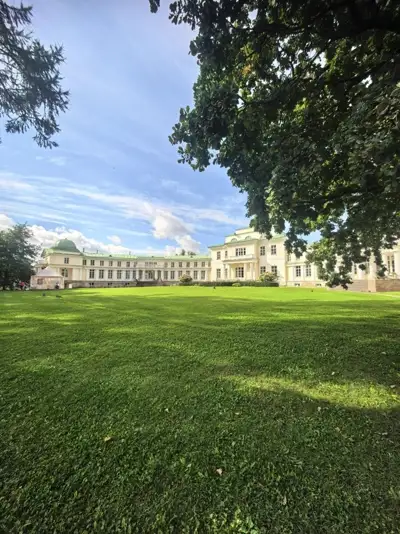
Maryino Estate is the ancestral estate of the Stroganov-Golitsyns between the villages of Andrianovo and Tarasovo in Tosnensky District, 60 km from St Petersburg. From 1811 it was a majorat built by Sofia Vladimirovna Stroganova. Since 2008 it has been a private hotel whose interiors were restored from 19th-century documents, and every room is one of a kind.
History: the Stroganovs, Voronikhin and a school for orphans
The estate was named after Maria Yakovlevna Stroganova, who built the first estate back in 1726. In 1811 her grandniece Sofia Vladimirovna — née Princess Golitsyna — bought Andrianovo and commissioned a palace from Andrey Voronikhin: a former serf and the architect of Kazan Cathedral. Voronikhin managed to lay the foundation, the water system and the roads to the Moscow highway. After his death the construction was led by his pupil Ivan Kolodin, and the English garden was laid out by the gardener Pigamm.
In 1825 an agricultural school for 50 peasant orphans from the Stroganov Perm estates opened at Maryino. It was here too that the forester Alexander Teploukhov, a founder of Russian forestry, began his work.
The park: stage sets for photos
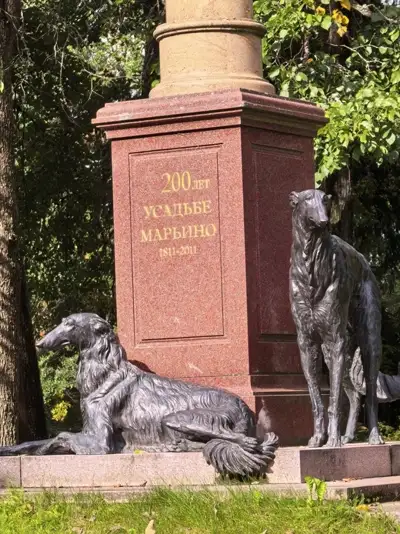
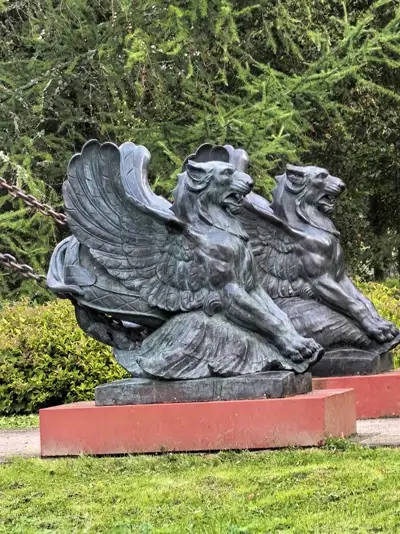
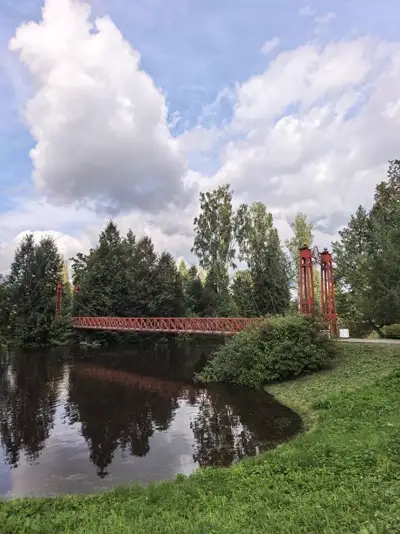
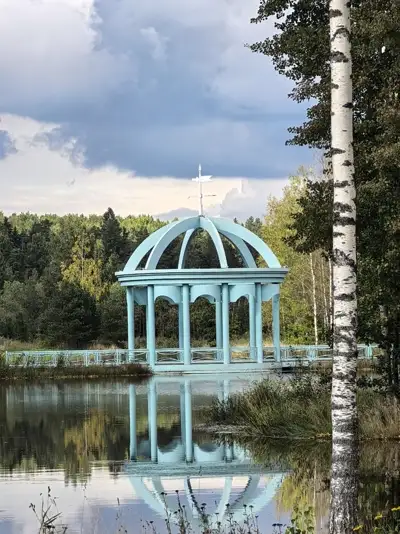
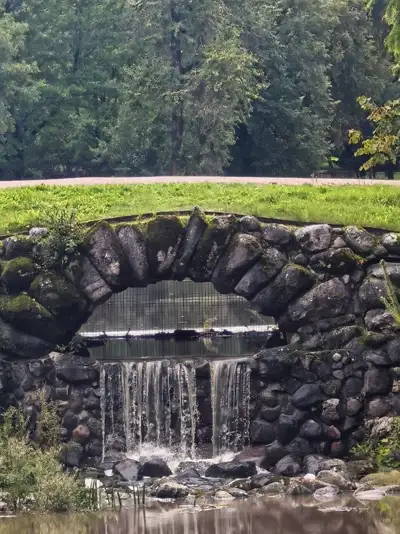
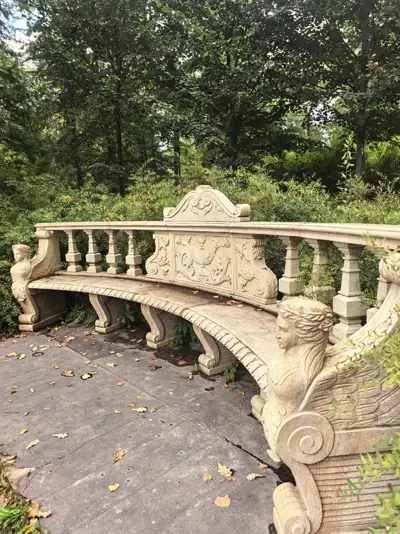
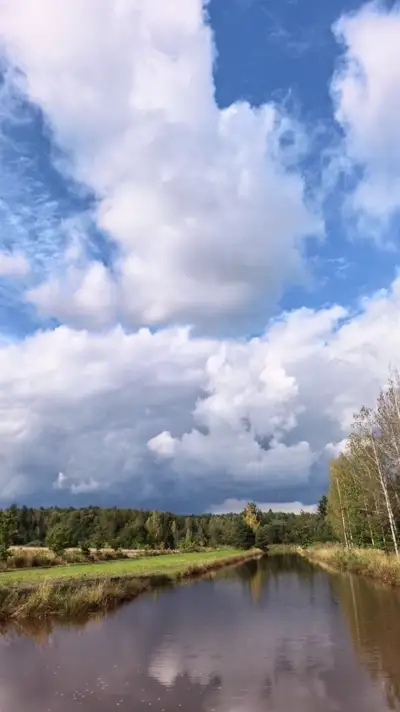
The landscape park is what is worth the trip: embankments, hills, ponds, a red suspension bridge, granite benches with sphinxes, antique vases, a grotto-waterfall, a turquoise rotunda on a little island with mirror-like water. Every two hundred metres there is a new 'stage set': it is no accident that wedding photo shoots come here.
Animals and small pleasures
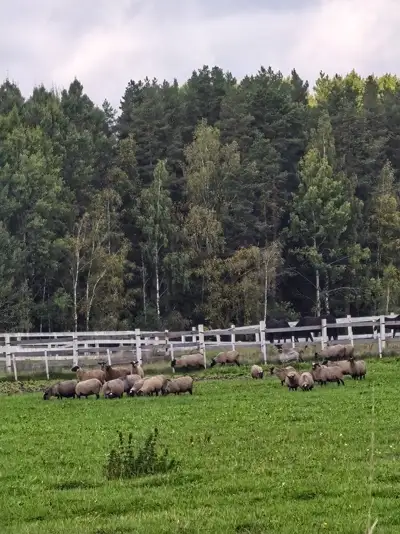
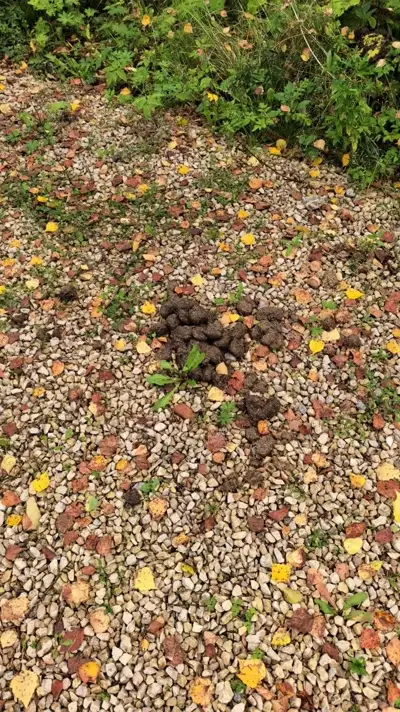
Sheep, geese and horses roam the park — tracks on the path show that horse rides are an everyday thing here. There is a Pyaterochka and a canteen in neighbouring Ushaki, and the well-house in the centre of the village is about full self-sufficiency.
Hotels and prices
Inside the park there is a high-class hotel (interiors based on 19th-century documents, all rooms different). Entry to the park is paid, around 1000 ₽, and cars are not allowed inside. Current prices are on usadbamaryino.ru.
FAQ
To the ancestral union of the Stroganovs and Golitsyns. In 1811 Sofia Vladimirovna Stroganova bought the village of Andrianovo and built the palace; until 1917 the estate was owned by the Golitsyns.
The first design and the basis of the park were created by Andrey Voronikhin, the architect of Kazan Cathedral. After his death in 1814 the construction was led by his pupil Ivan Kolodin, and the pavilions were built by Meyer and Sadovnikov.
No, entry to the park is paid — around 1000 roubles per person. Check the current price on the official website usadbamaryino.ru.
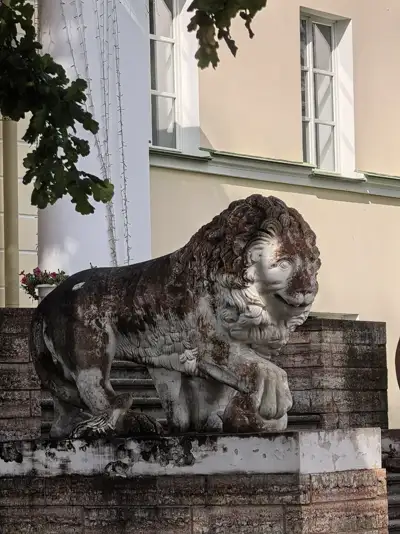
The palace, the marble lion, the granite benches with sphinxes, the red suspension bridge, the turquoise rotunda on the little island, the grotto-waterfall, the canal-mirror and the pasture with sheep and horses.
A personal travel archive: real routes around St Petersburg and Leningrad Region. spbilo.ru
Frequently asked questions
Who owned Maryino Estate?
The ancestral union of the Stroganovs and Golitsyns. In 1811 Sofia Vladimirovna Stroganova bought the village of Andrianovo and built the palace; until 1917 the estate was owned by the Golitsyns.
Who designed the Maryino palace?
The first design and the basis of the park were created by Andrey Voronikhin, the architect of Kazan Cathedral. After his death in 1814 the construction was led by his pupil Ivan Kolodin, and the pavilions were built by Meyer and Sadovnikov.
Can you walk in Maryino park for free?
No, entry to the park is paid — around 1000 roubles per person. Check the current price on the official website usadbamaryino.ru.
What is there to see in Maryino park?
The palace, the marble lion, the granite benches with sphinxes, the red suspension bridge, the turquoise rotunda on the little island, the grotto-waterfall, the canal-mirror and the pasture with sheep and horses.